
5-stars hotels, the Mediterranean Sea, and lots of tourists! That’s all about Antalya, Turkey. But also (and I would surprise you) Antalya has quite a well-developed recycling infrastructure and lots of opportunities to grow in the sustainable travel niche.
📌 General information
Turkish waste management system unfortunately is not a priority policy area. According to OECD data from 2019, Turkey recycles ~ 12% of its domestic waste, sending the rest to the landfill. By 2023, the recycling rate is aimed to reach 35 % and 60% by 2030. Despite the low-developed culture of recycling among locals, there are lots of recycling plants in Turkey. The problem is that most of them are struggling from lack of resources for further recycling – therefore they import waste from other countries. There is no specific fine for those who fail to sort trash: the level of sorting in the country is still quite poor. But intentional pollution of the environment is punishable by law by up to five years in prison (according to the Turkish Penal Code). The degree of the punishment is decided upon the severity of the pollution and its impact on the environment.
🏭Recycling Stations
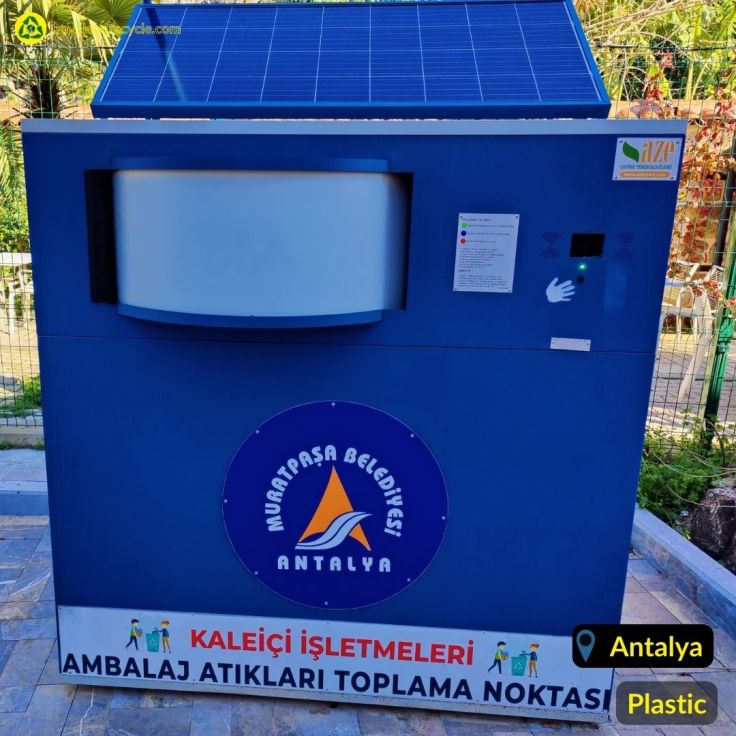
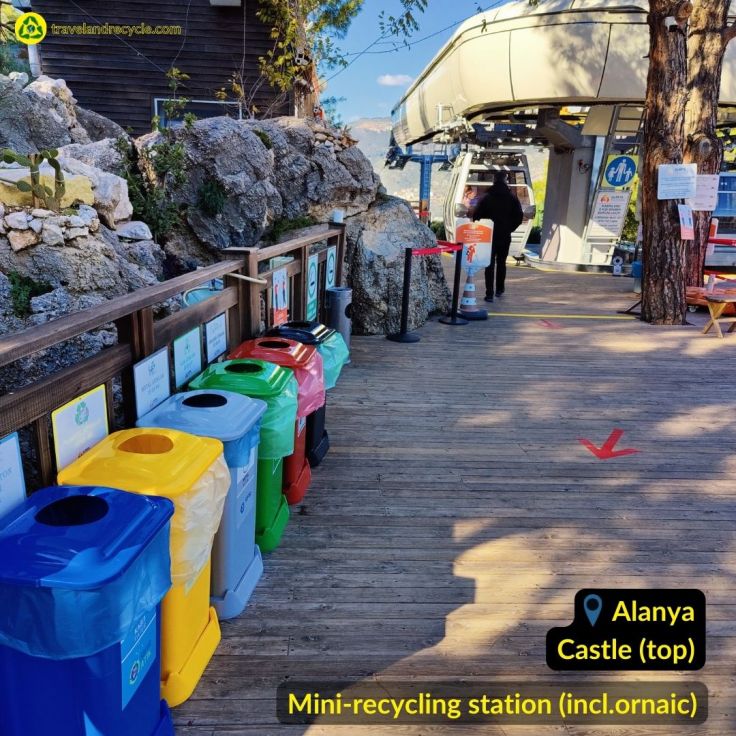
There are no centralized recycling stations with different types of waste accepted for citizens in Antakya, Turkey. But you can use a kind of mobile recycling stations across the city (find examples in the photo gallery).
It’s also worth mentioning several interesting peculiarities of the recycling process in Turkey.
~80 % of the recycling is handled by informal waste pickers (see photo below). In Turkey, there are estimated to be as many as 500,000 waste pickers (called “toplayıcılar”). Those making a living via the collection of recyclables off the street and from waste bins. This number is only an estimate as there is no official data kept on them (they are not employed or paid for this job officially).
Recommendation:
Netflix film “Paper lives” (2021) sheds light on street collectors’ life

“Green Neighbor Card Project” – is another initiative that is worth mentioning. In some cities and particular districts – for example – Muratpasa (central big district of Antalya city) there is a special program launched that aims to attract locals to better environmental practices by fattening their wallets.
How it works? Citizens sort their recyclable waste at home, then on a special day, time, and place nearby their home recycling car collect waste, weigh it, and depending on the weight add points on a virtual card. These points can be transferred into discounts in any shop or fast-food point – wherever there is a bank card terminal.
Collection points (looks like reverse vending machines) for this program with solar batteries you can find in the city center, but they are working only if you have Project virtual card. More details about the program are here: Environmental neighbor card (official website of this program).





🥛 Glass
📚 Paper
🥤 Plastic
🧷 Metal
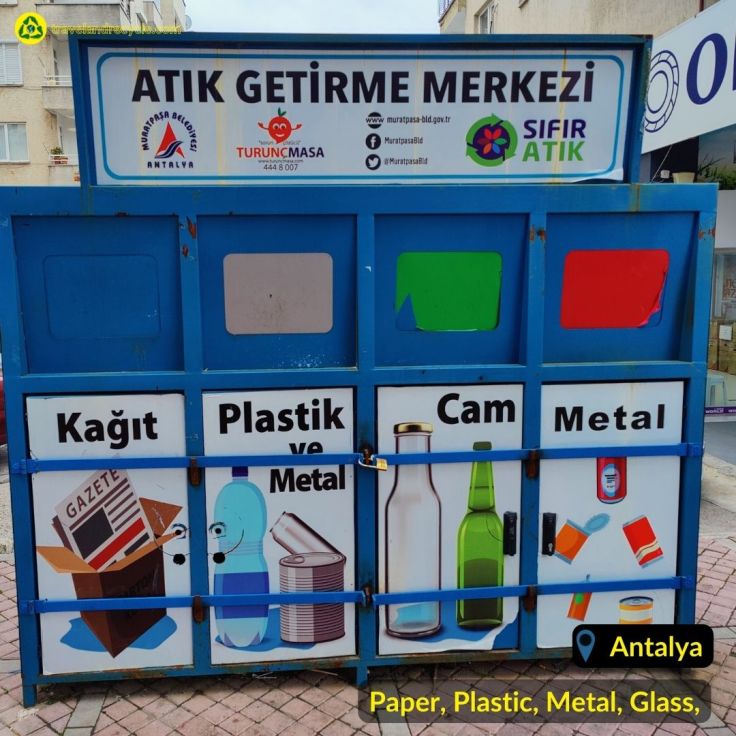
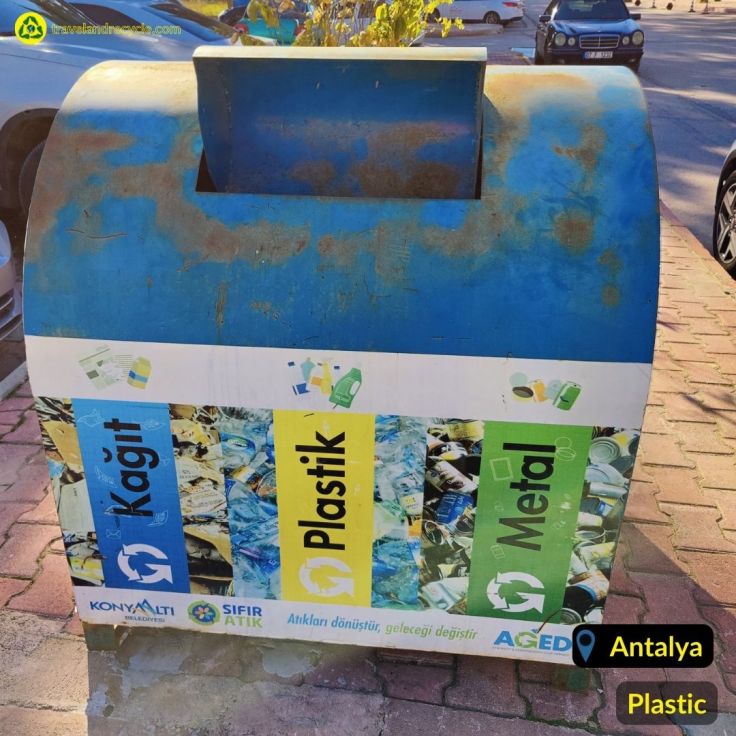
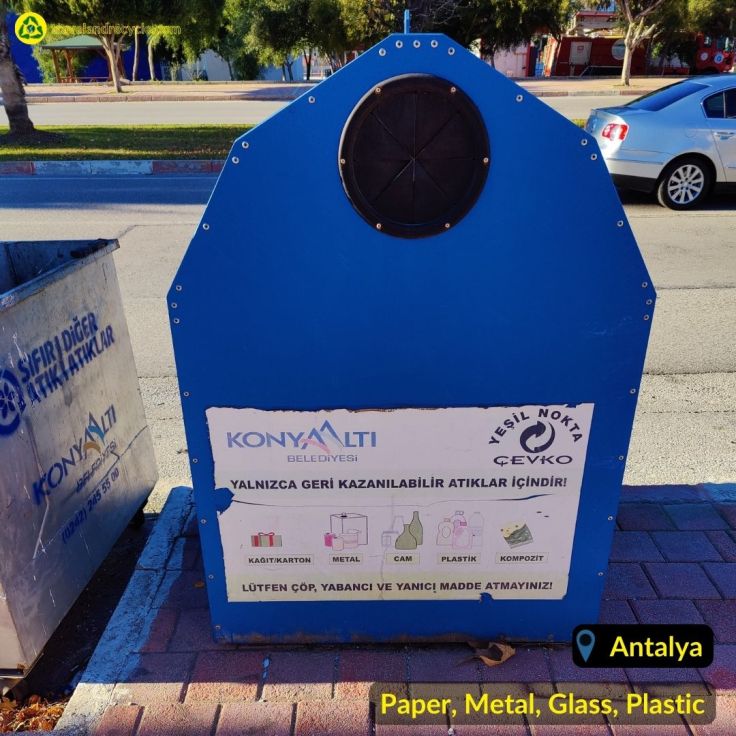
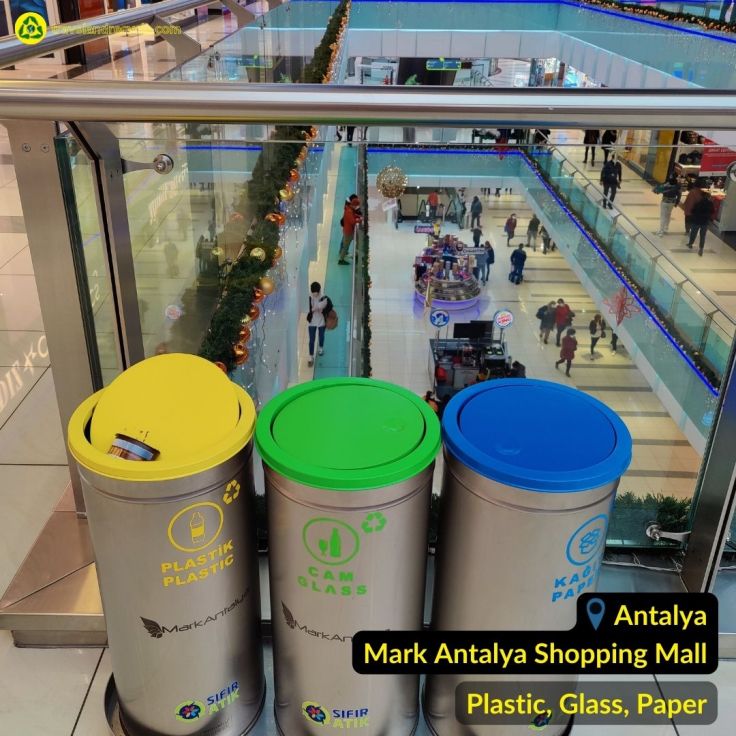
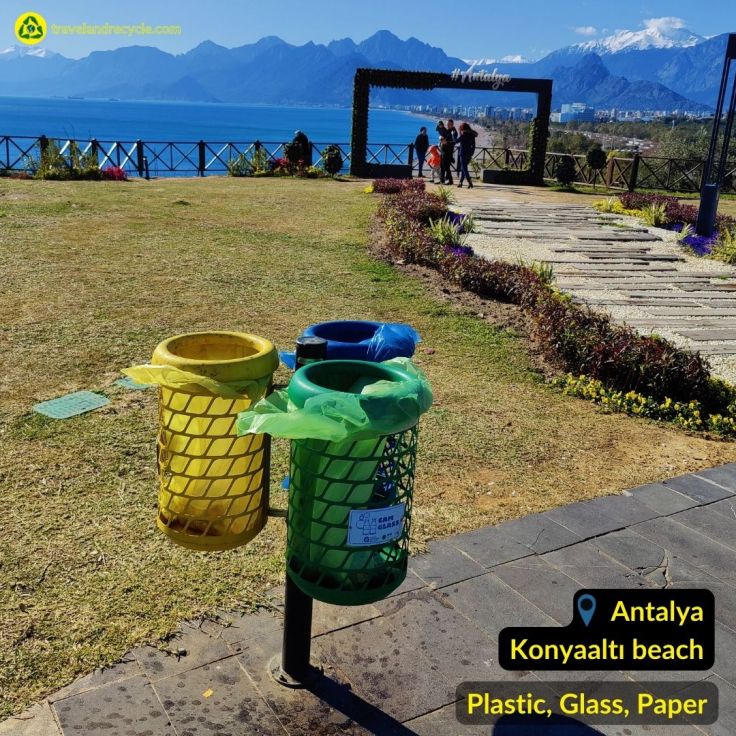
Colored bins for sorting glass, plastic, metal and paper are usually installed near houses closer to the road, in the city center, and big grocery stores (BIM, Carrefour) and shopping malls (Migros, Mark Antalya, Özdilek Shopping Mall).
Based on our research Konyalty area in Antalya city is the most well-equipped recycling area: lots of bins for paper, plastic, and glass at the seafront.
In the city center (near 7Mehmet restaurant) you could also find “fish” that collect plastic bottles.
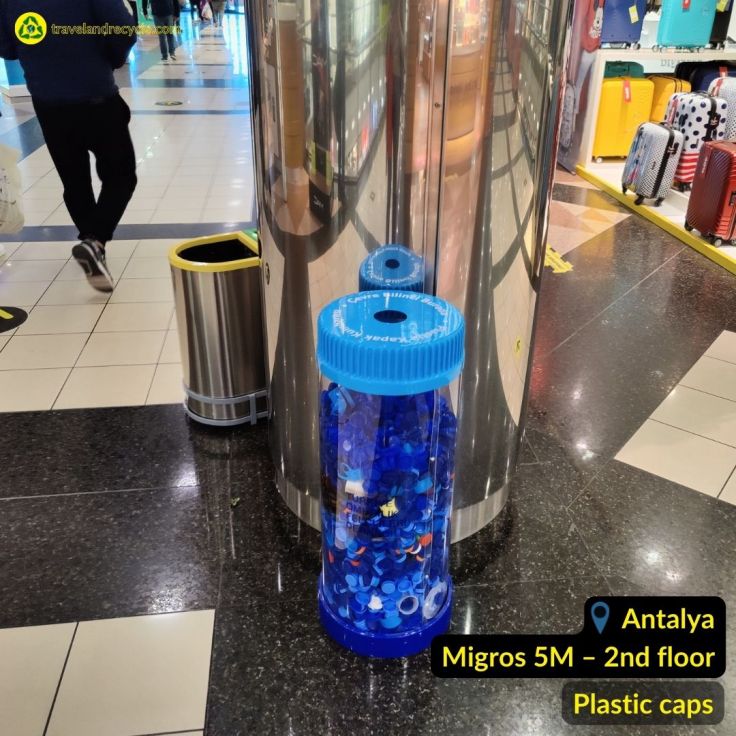
Bottle caps collection point was found in Antalya Migros 5M – 2nd floor (see a photo in gallery).
🔋 Batteries
💻 E-waste
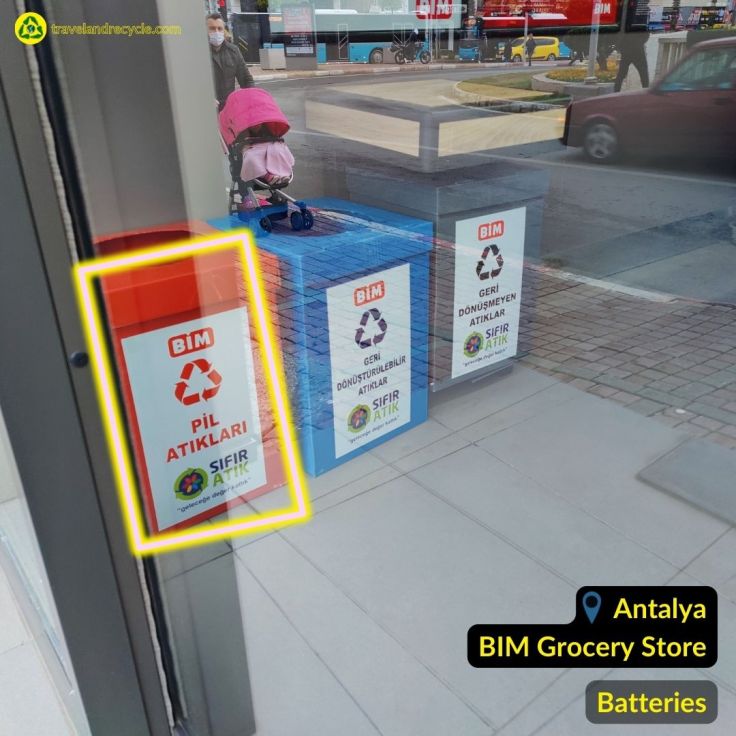
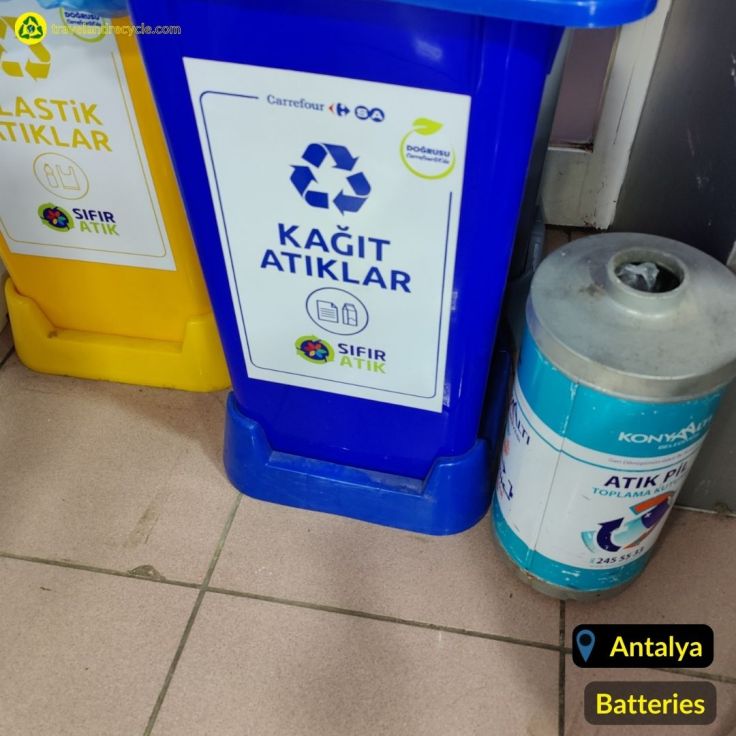
Batteries collection points were noticed in some SOK, Carrefour grocery shops (blue bins) and in some mobile operators centers (TurkCell, TurkTelecom) – find examples in the photo gallery.
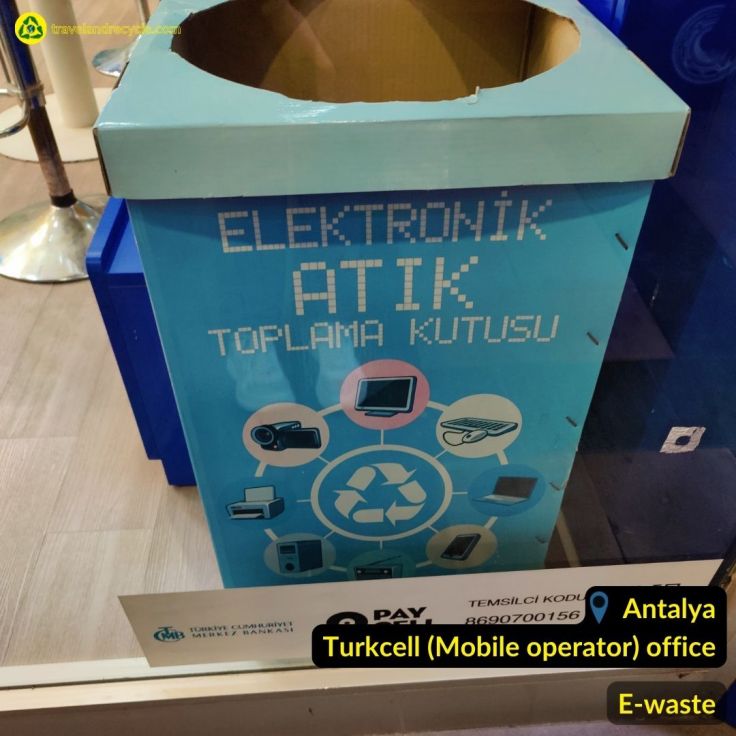
E-waste can be thrown in special containers in some (not all) mobile operators’ centers (TurkCell, TurkTelecom). Also, some street containers have e-waste bins – see photos in the gallery.
🧦 Textiles
It feels like textile is the most popular type of waste in Turkey in general and this region particularly – I made such a conclusion based on a huge number of dedicated bins.
There are lots of textile and shoes bins across Istanbul city. Usually, you can find them near houses or near the road on the streets (find photo examples in the gallery). Based on official information the textile waste that is thrown into these Textile-dedicated bins is selected and sent to the Social Assistance Stores, while unusable textile waste is sent for recycling.
🍏 Organic
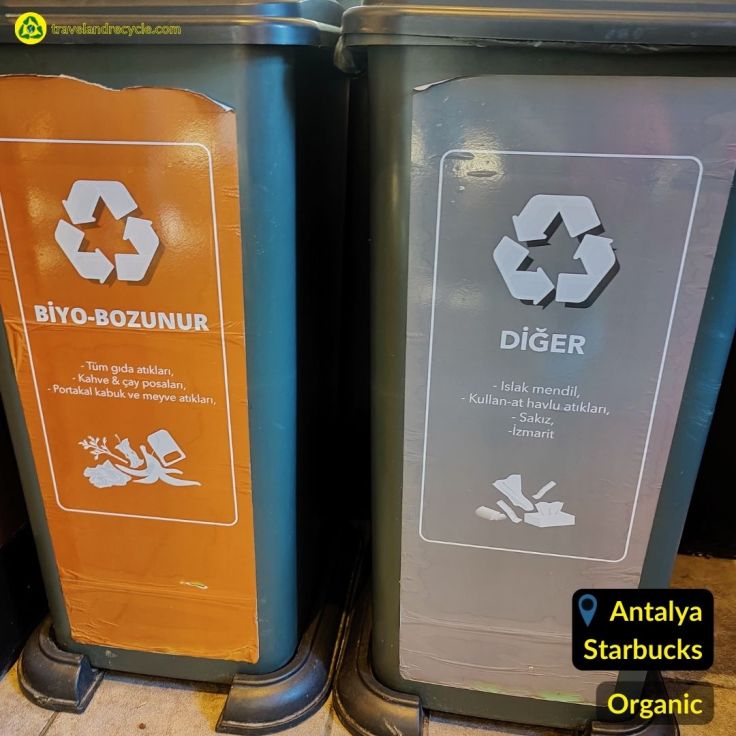
There is no centralized organic collection program in the Antalya region, unfortunately (esp. taking into account lots of fresh fruits and vegetables in this area). But there are some initiatives from big businesses: Carrefour and Starbucks have dedicated bins for organic (unfortunately, there is no traceable information about what then happens with this organic waste).
I also noticed organic bins in Antalya Airport and in the castle (on the top) in Alanya (see photos in gallery). But it’s quite difficult to imagine that you’ll go to the airport or to Alanya castle for the organic recycling bin.
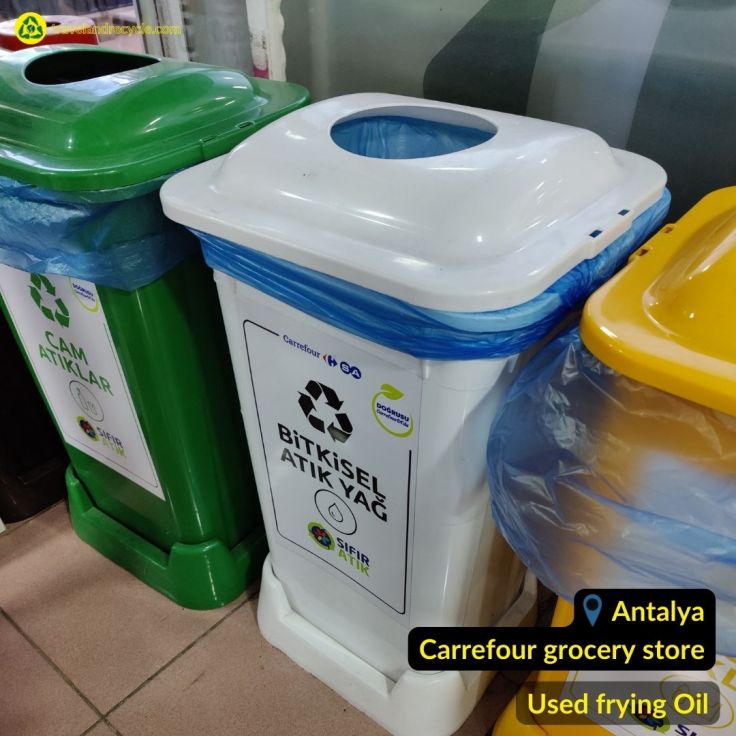
In some shops (Carrefour for example) you can also find a separate bin for vegetable waste oil (called “bitkisel atık yağ“ in Turkish). If you use oil a lot during cooking you can fill any empty bottle with oil waste when it’s already cold and bring it for further recycling into bio-diesel – an environmentally friendly fuel. Don’t pour used oil down the drain as it can cause blockages.
🔥 Non-recyclable
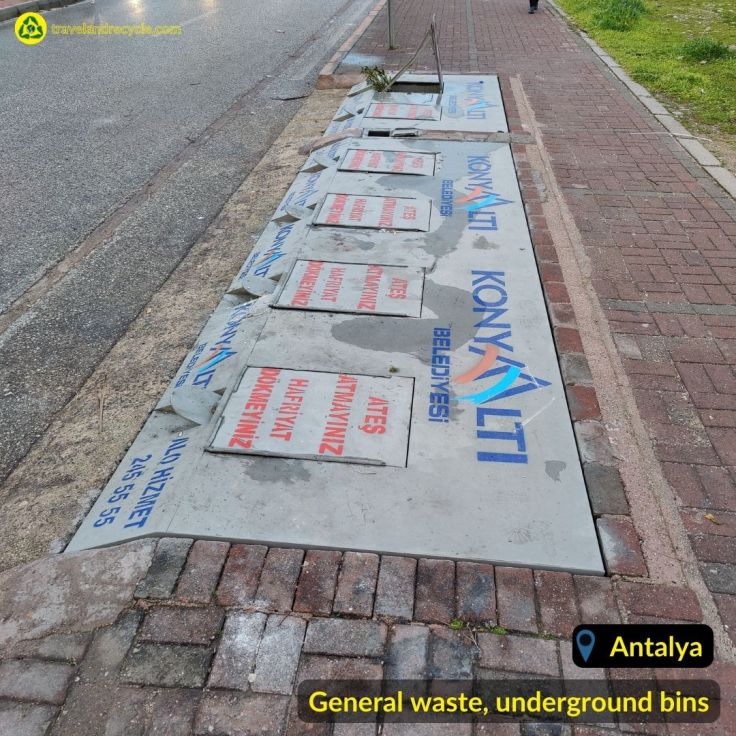
In Antalya, a state program is being implemented to install underground waste bins (embedded in asphalt – find examples in the photo gallery).
That helps to prevent the “flying waste” problem that is valid for open-headed bins. These trash cans can be used to throw away general waste that is not suitable for recycling. But there are still lots of standard gray bins.
By Hanna Shahuryna ⭗ Updated on February 2023
 Travel and Recycle
Leave a comment