(This Bulgaria Recycling Guide was updated in December 2024)
Bulgaria is a great country for vacation: lots of nature spots gems, interesting culture, and history. By the number of sites protected by UNESCO Bulgaria ranks 3rd place in Europe after Greece and Italy – did you know that? But how to keep your sustainable habits during travel and how to recycle waste in Sofia, Bulgaria – let’s make an overview!
📌 General information
Bulgaria has made significant improvements in the recycling process establishment since its EU accession in 2007. While Bulgarian legislation reflects the EU’s environmental requirements, implementation still remains a challenge. Bulgarian country’s recycling rate (including composting) is 24,6% (2022 data, Eurostat), while the plastic recycling rate is up to 59% (2018 data, Eurostat).
Contrary to the desired trend, there is an increase in the usage of landfills and a decrease in recycling. Bulgaria still has one of the highest landfill rates at 62% (2017) in comparison to the EU average of 24%.
There are special fines for not-sorting waste in cities, where there are recycling containers installed (in all big cities they are): from 170$ to 550$. But like in other countries these types of fines are not applied often.
🏭Recycling Centre
There are no centralized recycling stations with different types of waste accepted for citizens in Bulgaria. At the same time, there are lots of opportunities to recycle waste: a widespread network of recycling bins across the country, initiatives for sorting rare types of waste, and even organic composting!
Find more useful details on the Ecopack Project web page which has a useful map of colorful recycling bins (for popular waste types). Pay attention that part of the information is available only when you use the Bulgarian version of the website.
And another great Project that I strongly recommend you check is the Green Sofia Project: on their website Team placed not only popular waste types recycling points but also quite detailed instructions for rare waste types. You can also check the Green Sofia Project Facebook page. Note that Facebook pages are auto-translatable into your preferred language😉.
Rare waste types accepted in Bulgaria are medicines, paints, furniture, tires, machine oils, and thermometers. Find more details in the Non-recyclable section of this post
🥛 Glass
📚 Paper
🥤 Plastic
🧷 Metal
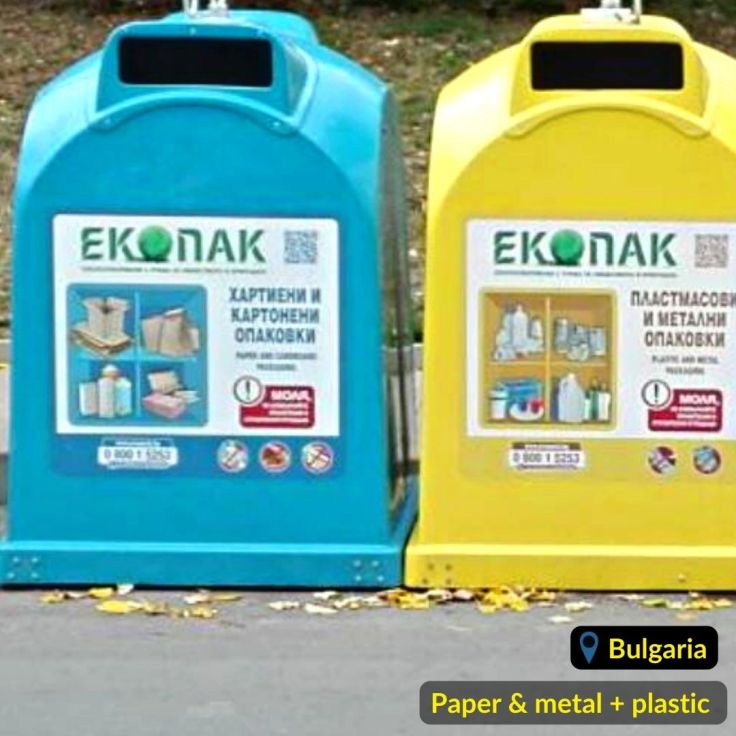
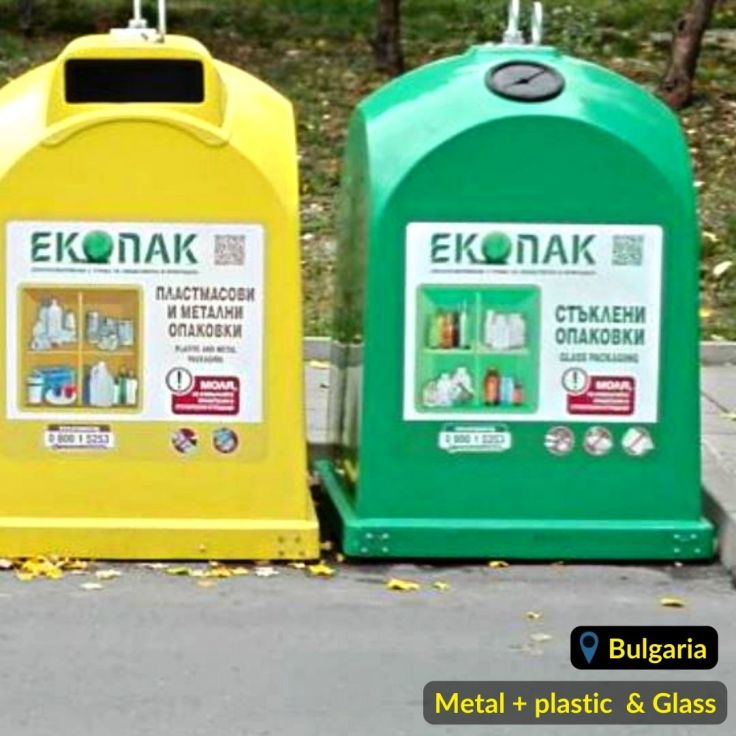
Color coding for recycling bins in Bulgaria:
- green for glass;
- blue for paper;
- yellow for metal and plastic.
Recycling bins are widespread across the country. To find the nearest one check the EcoPack Project map:
Two useful tips from me here:
1) To find the map just scroll down the page. Unfortunately, the map is available only on the Bulgarian version of the website.
2) Map could be a little bit outdated, but this is even good news in this particular case: in reality, more boxes are now available than marked on the map – just look around!
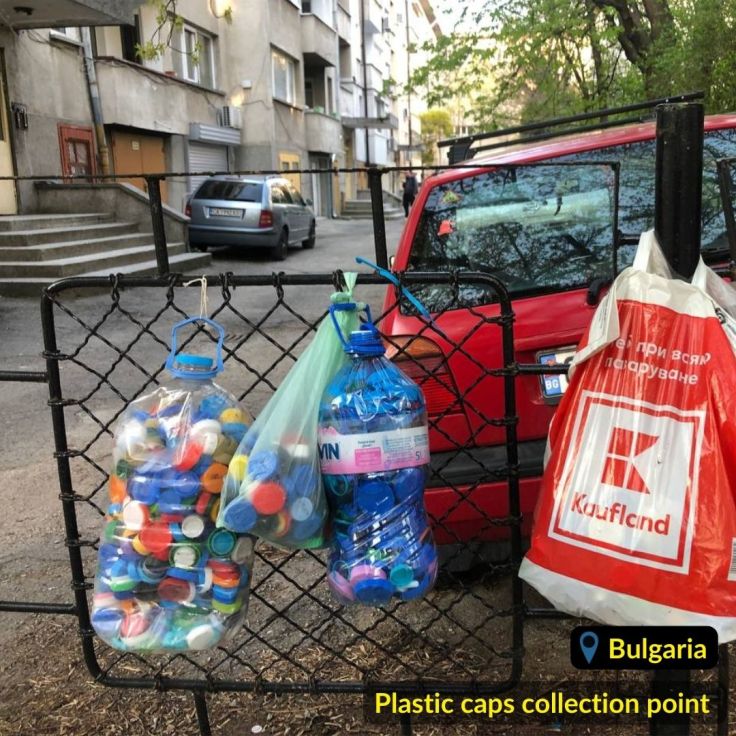
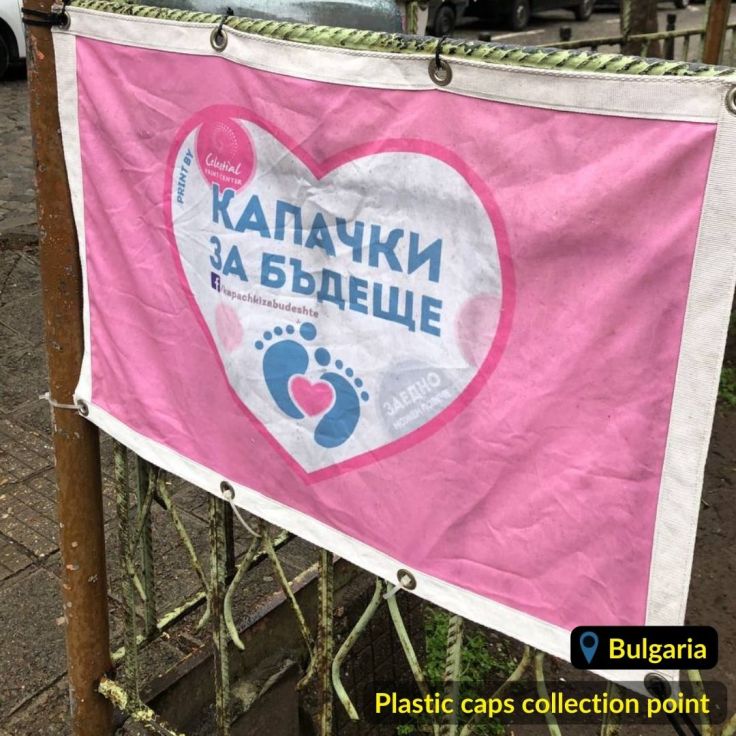
There is a very cool local initiative is to collect plastic bottles caps called “Caps for Future” (“Капачки за Бъдеще”):
The project mission is to transfer money from caps recycling income into charity goals such as purchasing neonatal ambulances and many others.
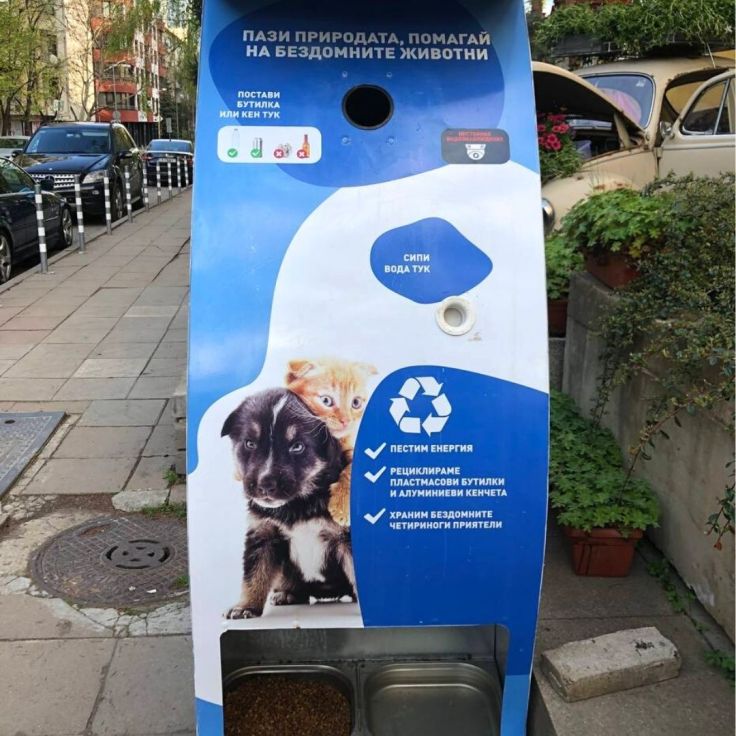
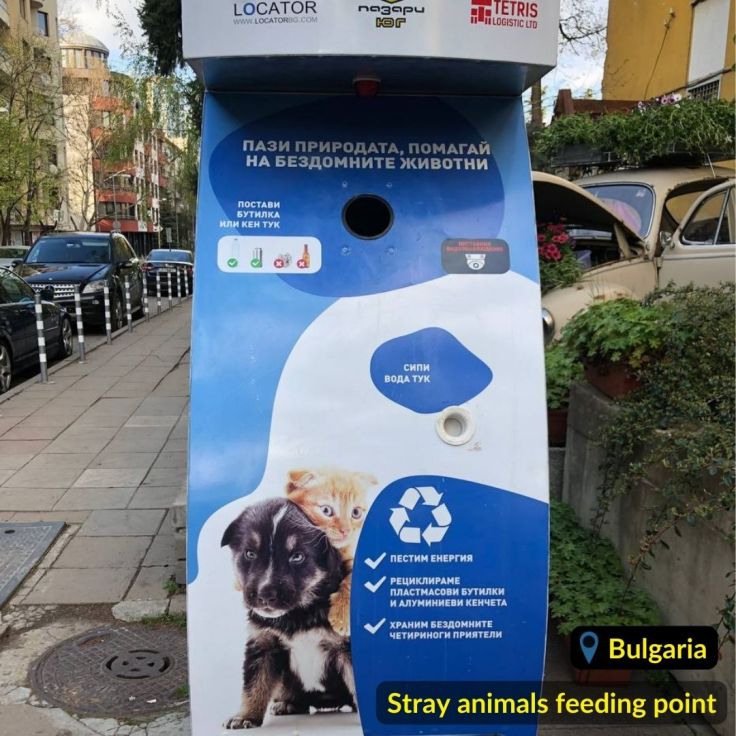
Another initiative to follow is the so-called “DogMat” (“кучемат” in the local language) – it’s a network of vending machines that feed stray animals after you place a plastic bottle or aluminum can in the machine.
🔋 Batteries
Batteries are accepted commonly in many places across the country. The most popular and commonly-spread collection points are mobile operators’ offices (A1, Vodafone), supermarkets (Fantastico, BILLA, Lidl, Kaufland), and even banks: almost every business has at least small containers where you can leave batteries.
💻 E-waste
E-waste is accepted in Electronics shops (such as Technopolis) and even free-of-charge transportation is available (better check details in advance by phone).
Also, some organizations accept E-waste from civilians in their offices (addresses on websites) based on the initial appointment: I can recommend these 2 organizations: Greentach and EcoBattery.
🧦 Textiles
The easiest way to find the nearest textile recycling bin is to use the Texcycle Project website.
Some second-hand shops, such as Mania can also take your clothes for recycling: basically, they sort clothes and then direct them to people in need.
Popular shops like Zara and H&M have their own recycling programs (if you trust these recycling programs).
There is also an option to give your textile to Red Cross Organization: check the details under the link.
And the last option is for true-adventure lovers: you can come to Zhenski Pazar (Bulvard Stefan Stambolov, Lions bridge metro area) and simply leave your clothes somewhere nearby or suggest them to someone in need.
Note: it’s an area with homeless people, gypsies, and just poor people who searching for food and clothes for a living. Usually, they take everything you bring in a few minutes.
🍏 Organic
Based on information on the Waste.Sofia Project website (“Зелена София”) biowaste such as leaves, grass, branches, and so on could be provided for further composting on special collection points, find more details here.
At the same time, unfortunately, there is no centralized household organic collection and sorting initiatives in Bulgaria.
From time to time you can find organic recycling boxes around some restaurants or schools, but usually, they are full of plastic waste.
But in general, there is a feeling that step by step Bulgaria is on the very right way in organic sorting and further composting.
🔥 Non-recyclable
Mixed (or non-recyclable) waste can be thrown in standard grey waste bins. But before throwing something away please check Waste.Sofia website (“Зелена София”) – as lots of rare waste fractions (such as medicines, paints, furniture, tires, machine oils, thermometers, etc.) are accepted in Bulgaria. Very detailed and clear instructions are provided here. Enjoy!
By Hanna Shahuryna ⭗ Photos Tatiana Kurilenko ⭗ Updated on December 2024

 Travel and Recycle
Leave a comment