This Recycling Guide for Serbia was updated in December 2024
Serbia can be named as a business center of the Balkans. And today we’ll make a virtual trip to the recycling infrastructure of the country.
In this recycling guide, I’ll focus mostly on Belgrade – the capital of the country – with cool opportunities to stay on the green side of sustainability: reverse vending machines (“reciklomat“), and clear recycling bins infrastructure – that all make this city attractive to me. As a bonus, I’ve also added some insights about recycling in Novi Sad – a popular destination for tourists (by the way, check my post about hiking weekend in Novi Sad). And check other posts and highlights on my Instagram page to know more!
📌 General information
Let’s start with the general overview. The recycling rate for municipal waste in Serbia is quite low: 17,6% in 2022 (acc. to Eurostat). And the major part, up to 80%, of the municipal waste is still disposed of in landfills, unfortunately. There are some expectations that the introduction of a deposit system with so-called “reciklomat” – reverse vending machines – can help to improve the situation. Recicklomats pay money for your recyclables: you can choose one out of three options:
- top up your transport card;
- top up your mobile phone sim card;
- send some money to charity.
To find the nearest recicklomat as well as the status you can use the dedicated map. Pay attention that recicklomat can be full and it means that you’ll need to go to another machine (usually 5-15 minutes walk) to leave your recyclables and (cherry on the top) earn money.
To follow recent eco and recycling news and projects in Serbia I recommend you Plavo i Zeleno (translated as “blue and green”) project website.
🏭Recycling Centre
Recycling centers are not popular in Serbia, due to quite a well-developed recycling infrastructure, but according to one of the local website there is a recycling plant, where you can bring your recyclables (worth to double check this info, as the article that I’m referring on was posted in 2021).
I also like the project “Еко-кеса за чистији град” (which can be translated as “eco-bags for the clean city”). To take part in this project, all you have to do is go to the municipality where you’ll be provided with 24 “eco-bags” with unique barcodes. Then during the week you should fill up this bag with recyclables and leave it on a certain day of the week in a certain place: check all details here (as it’s in Serbian, please use Google Translate). In exchange, you’ll have 20% discount on waste management services. Sounds like a good motivation!
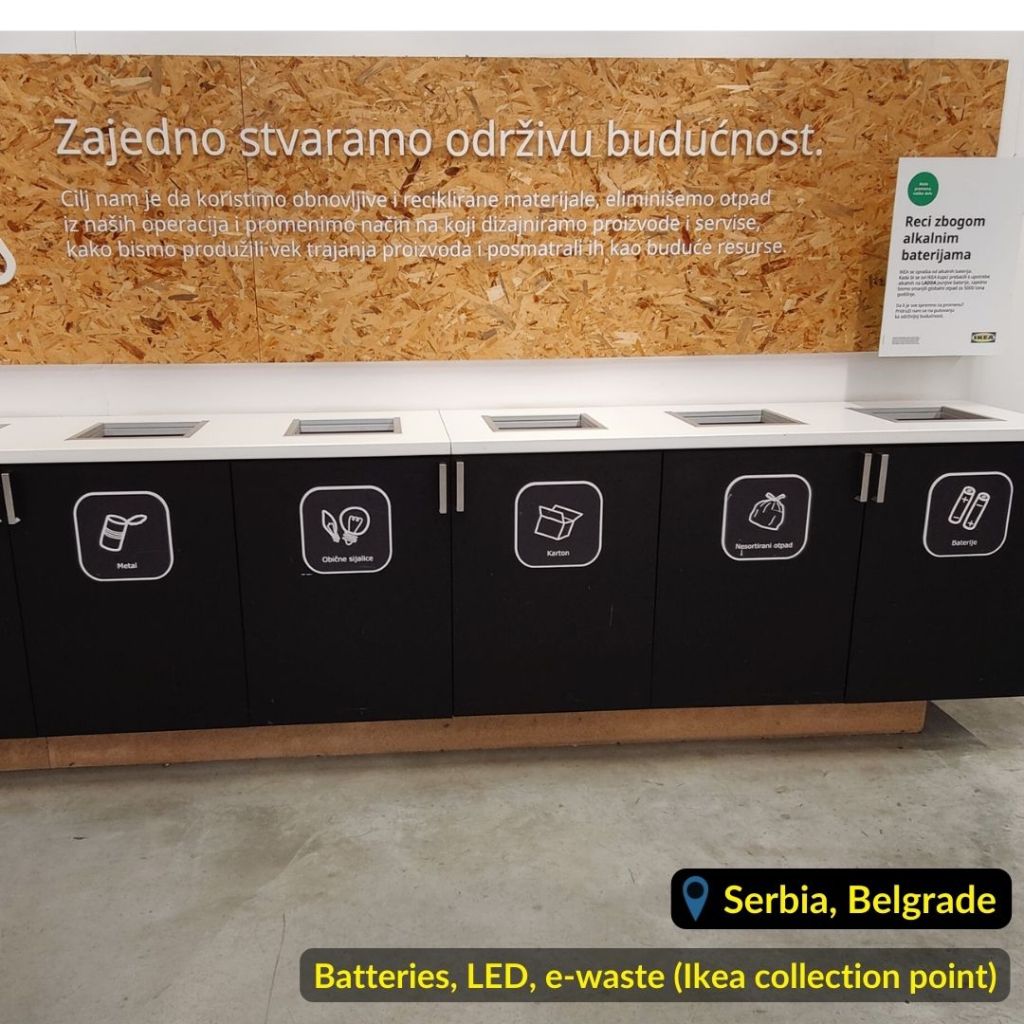
Ikea shop can also act as a recycling yard: here you can bring quite a big range of recyclables: check photo #6 in the gallery below.
Rare waste types that are accepted in Serbia:
- package from parfum is accepted in “Sephora” shops;
- expired medicines are accepted in the “Lilly” pharmacy chain;
- furniture (made by Ikea) accepted in …Ikea! (check details on the website).







🥛 Glass
📚 Paper
🥤 Plastic
🧷 Metal
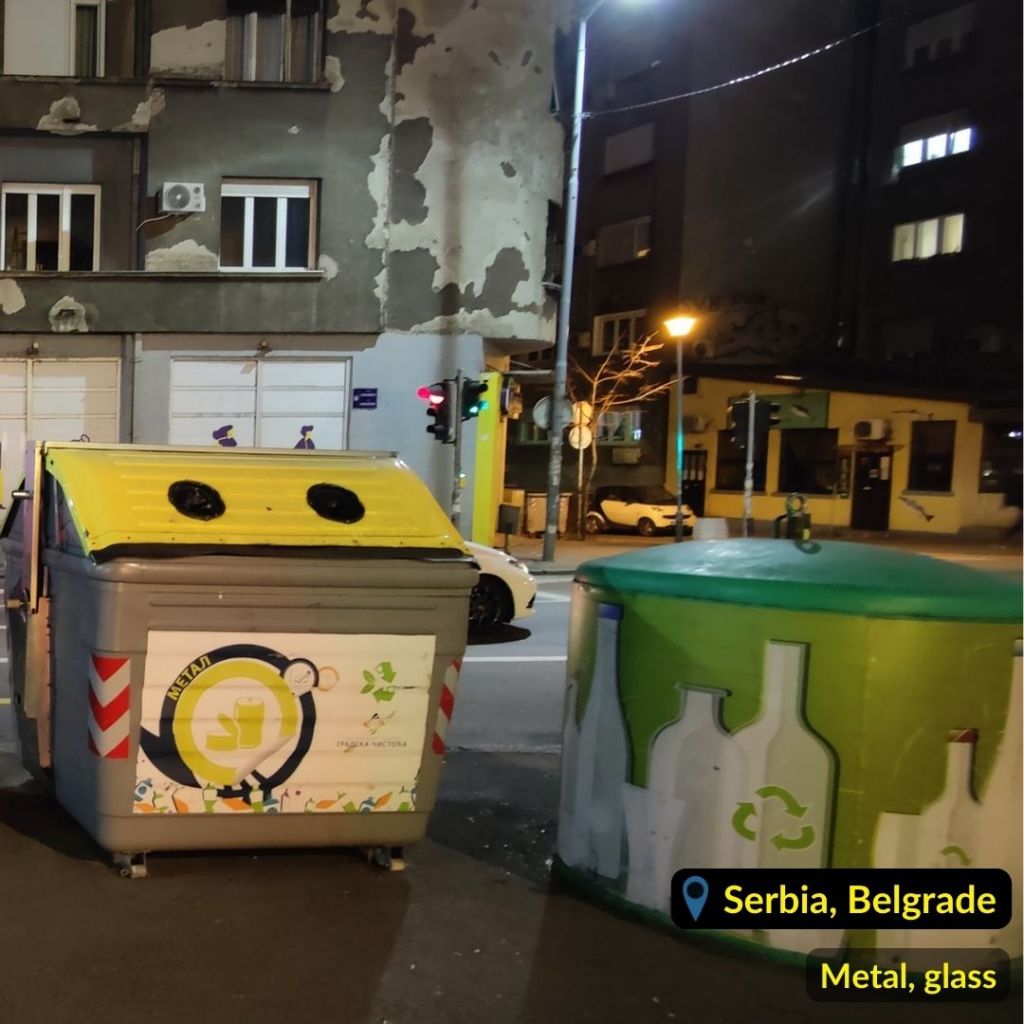
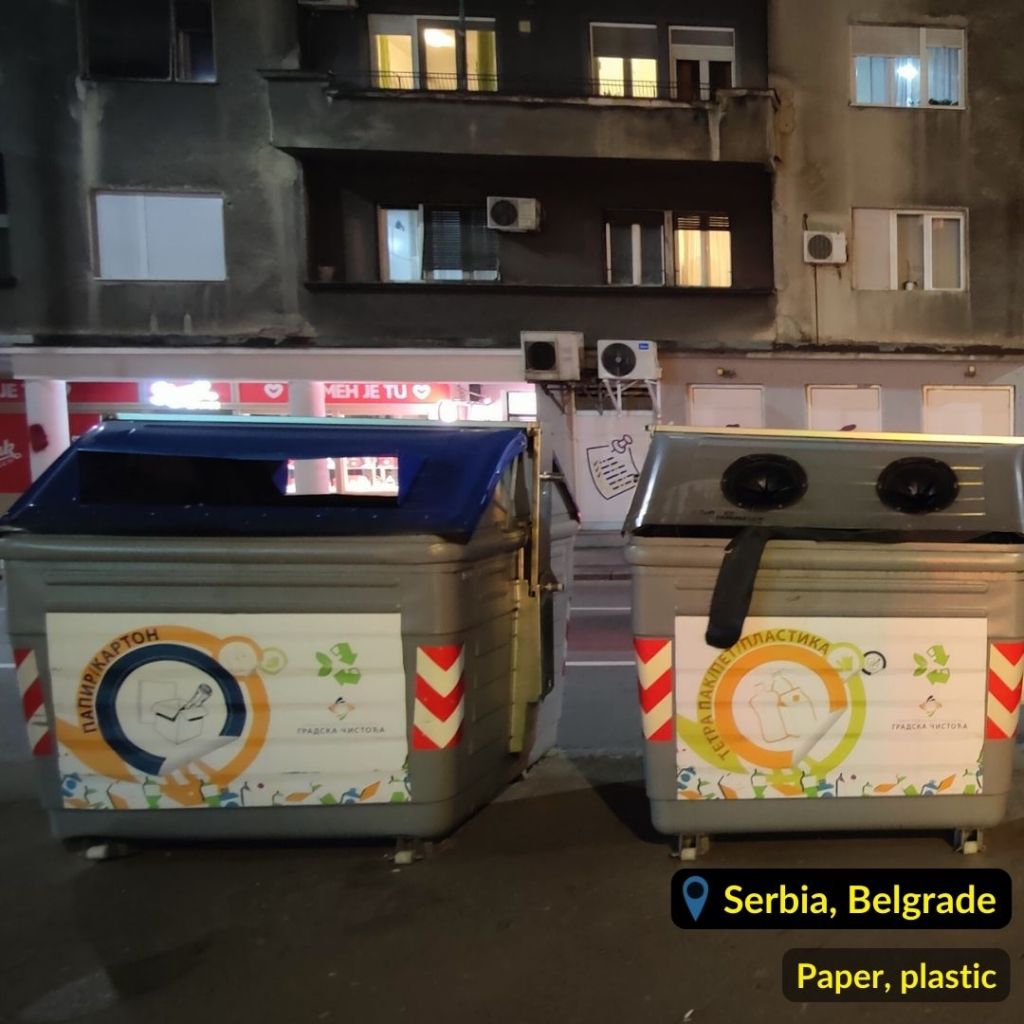
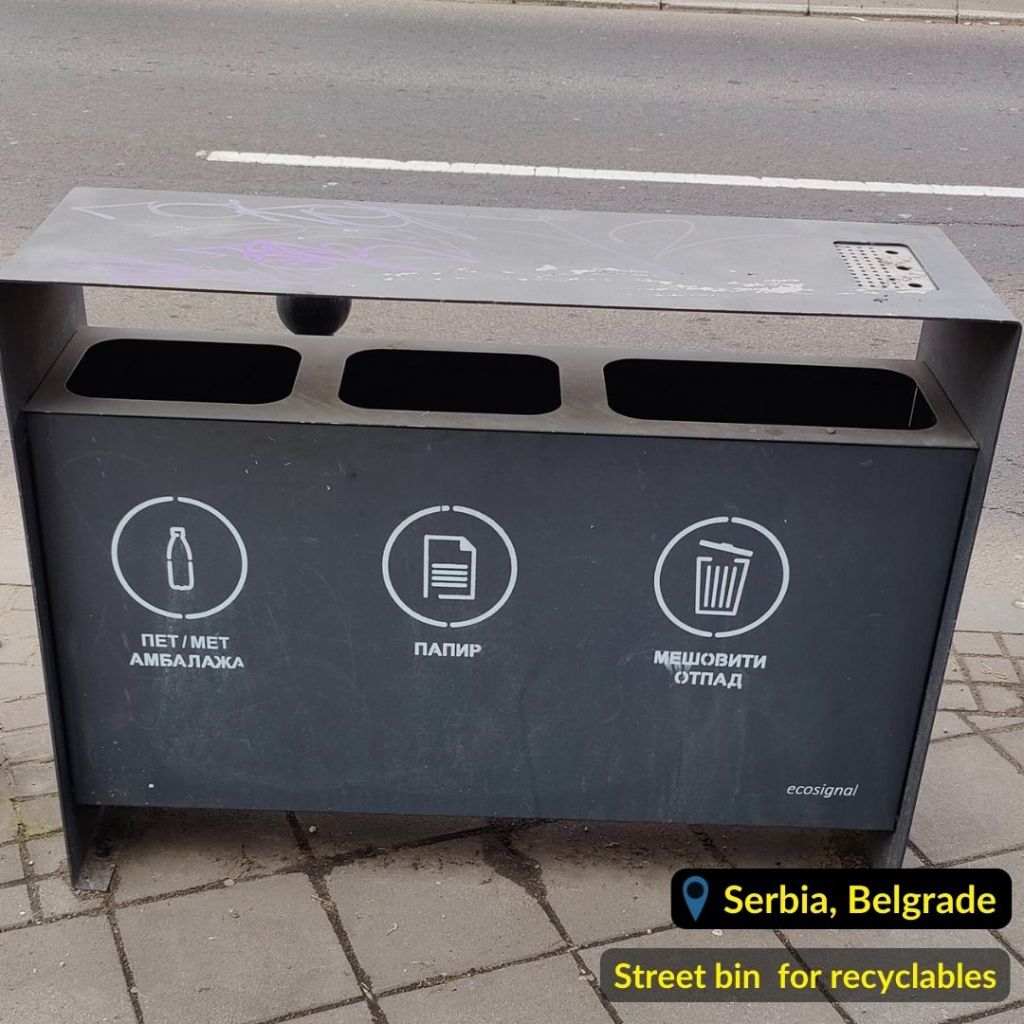
You can easily find recycling bins for popular waste types walking across Belgrade streets (check the gallery for this post above). The variety of forms and sizes can be overwhelming, so my advice is to follow the rule: the bigger the bin – the better. Yep, I know! You’ll exclaim “Size doesn’t matter!” …but it is! The content of bigger bins has more chances to find their way to recycling yards and recycling plants if we compare them with smaller examples (like the grey bin in photo #7). So please be conscious and choose the proper bin, if you’re eco-nerd, as I am.
I also encourage you to check this website (unofficial) map with recycling bins locations.
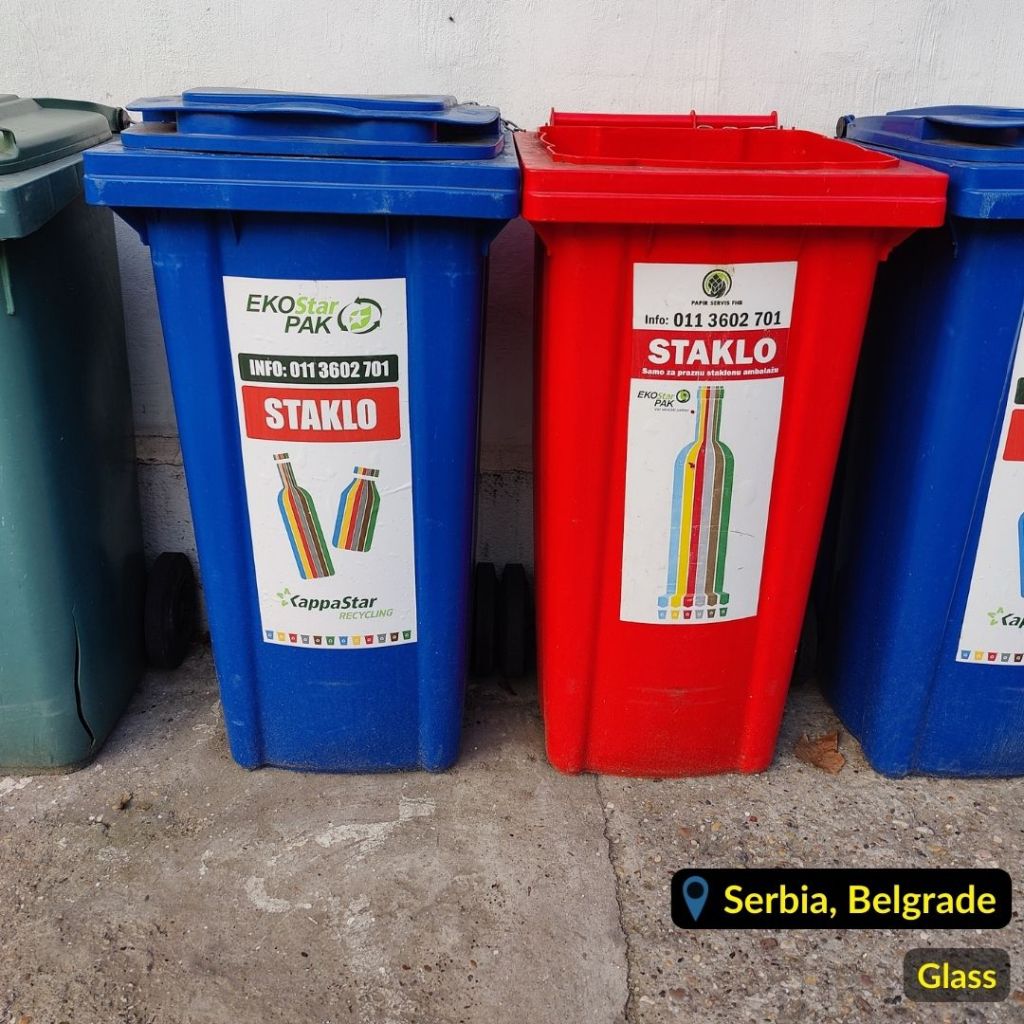
Glass recycling bins have very distinctive bell-shaped forms, but don’t hurry up! Try to propose your glass for reuse in this Facebook Group: as we all know reuse is always better than recycling, right?
Plastic types that are accepted for recycling in Serbia is limited to PET-1 bottles, HDPE2, PP5, and plastic caps (use DM shops infrastructure: photo #5).
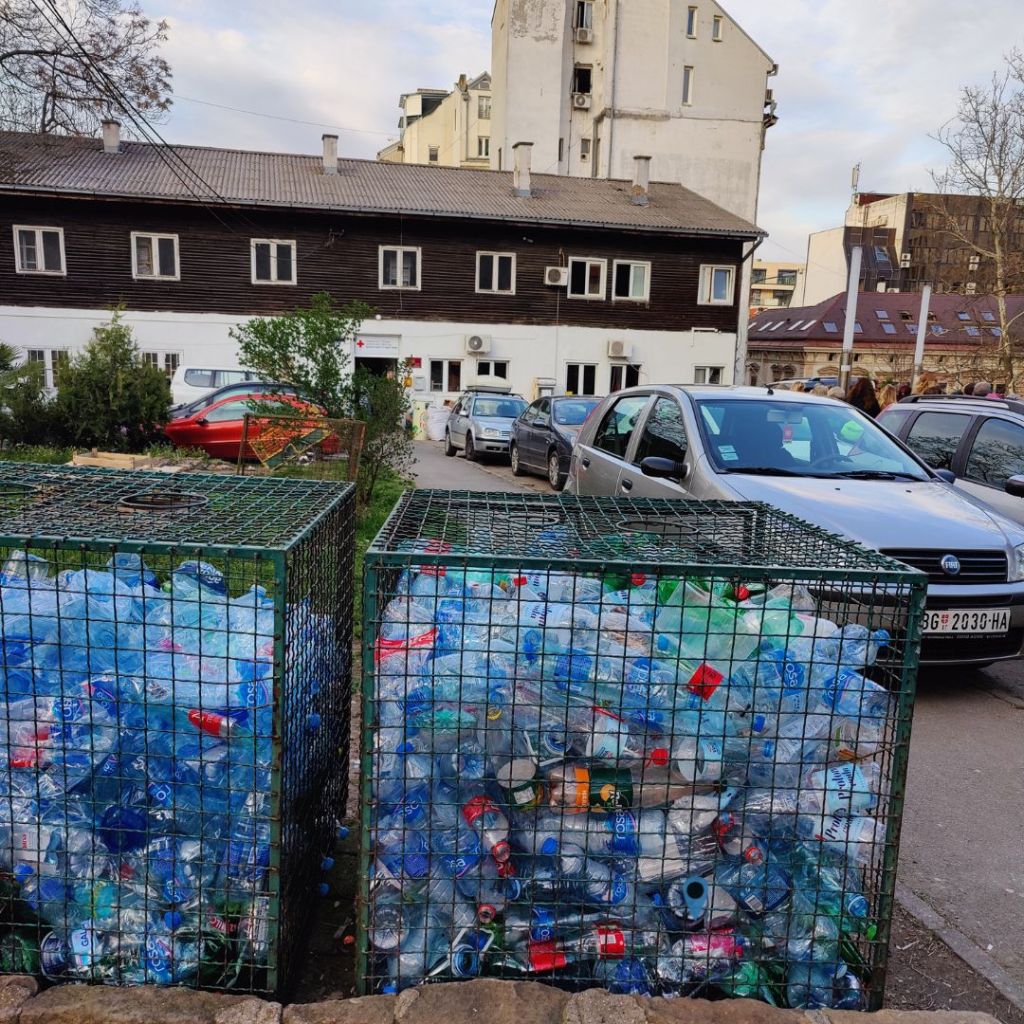
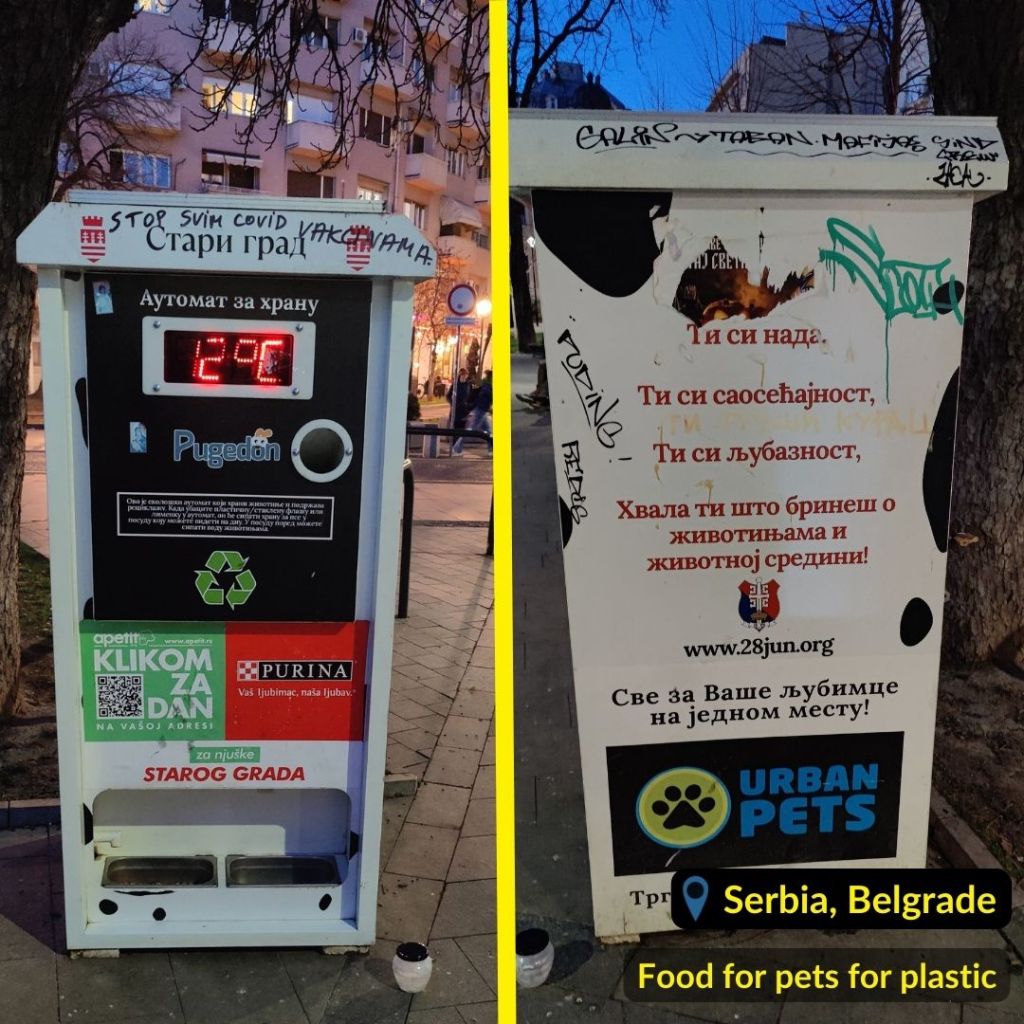
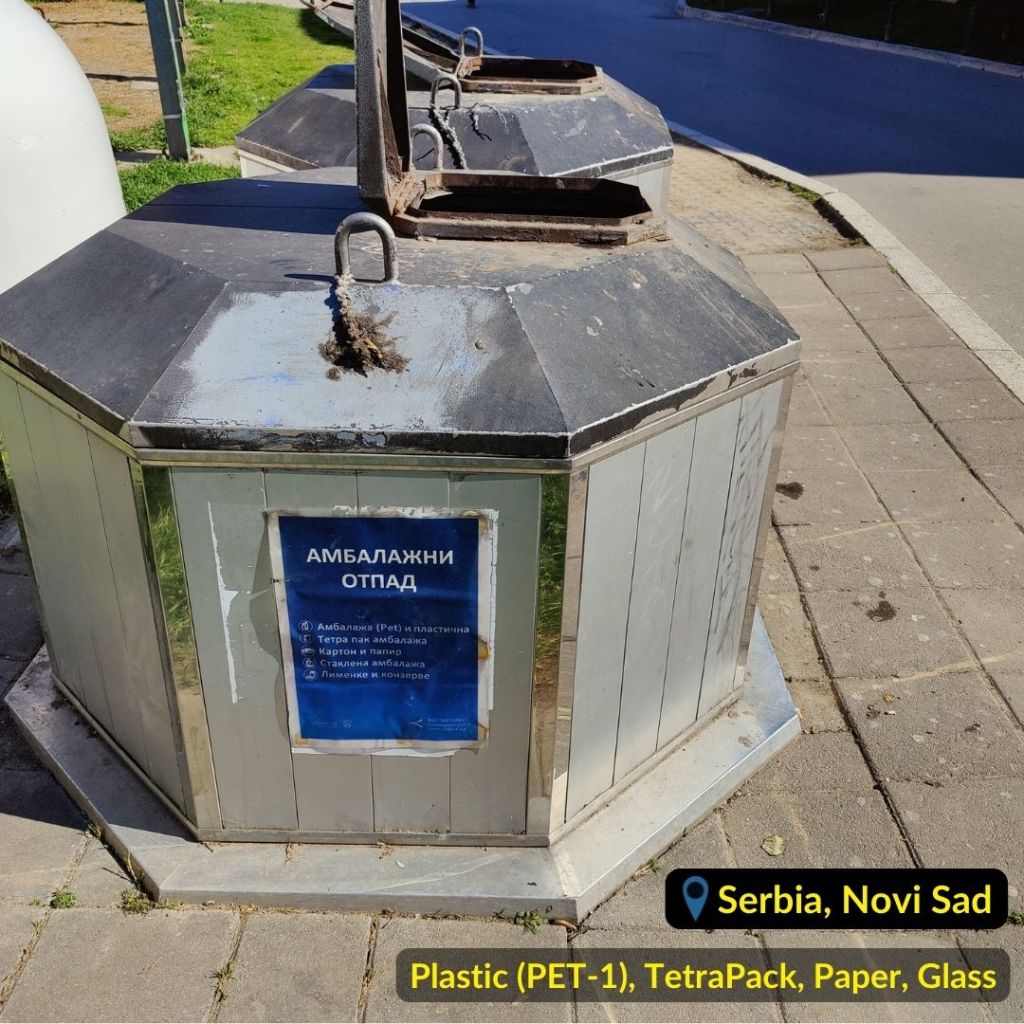
Some bins for plastic recyclables can be found in a very spectacular place, like the PET-1 bin in Novi Sad in photo #13. I also like projects like the reverse vending machine in Park Vojvode Vuka (photo #12), where you can exchange your plastic bottles for food for stray animals.
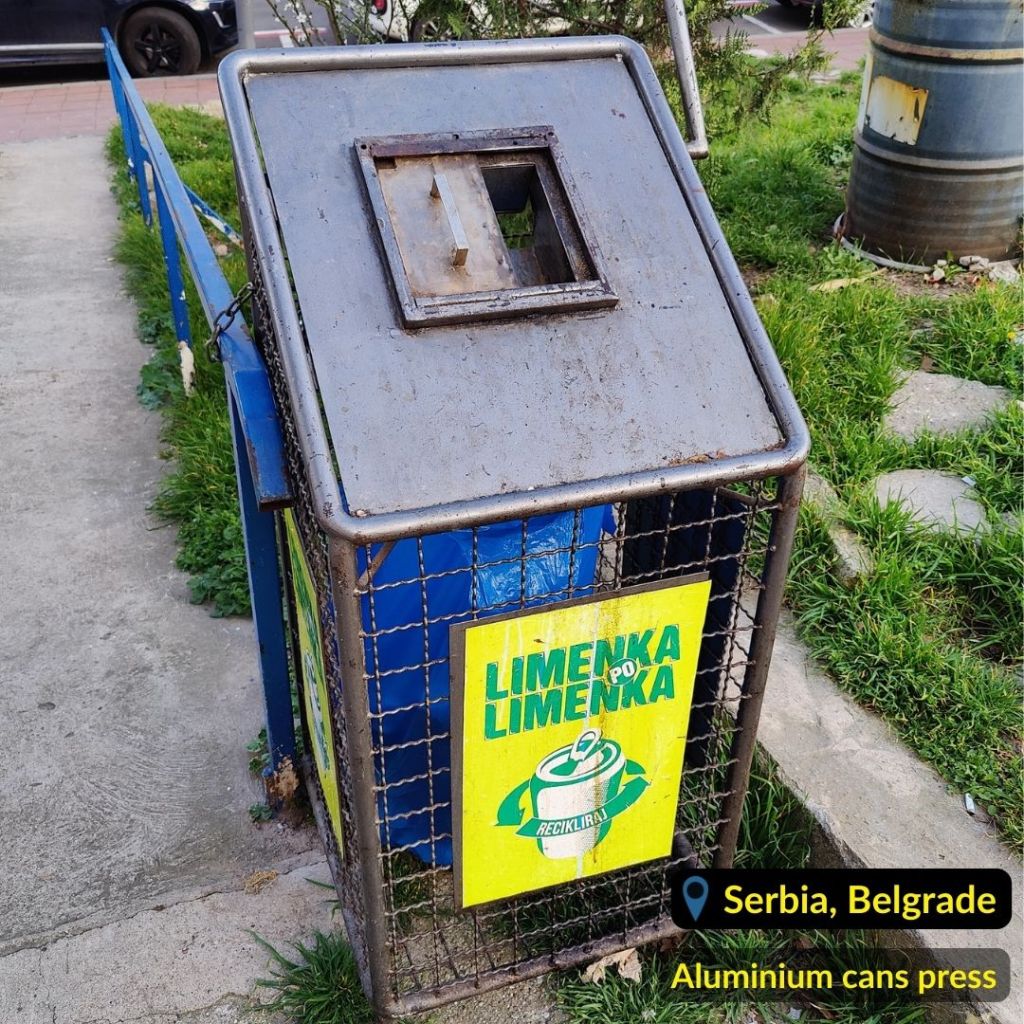
Paper and metal – no special instructions or hacks that I can give you here, my friends. Just make sure that you empty and slightly clean your recyclables, then place to the right bin – that’s it. But if you want to find some entertainment with metal recycling go to the Studentski Park in Belgrade: here you can find the press for aluminum cans near the Red Cross building (photo #9 in the gallery above).
Surprisingly, Tetra Pak is also accepted for recycling in Serbia (and looks like it’s really recycled) – place it in the paper bin (but always remember that it’s not paper by nature, but a complex 7+ layers package! So you preferably should avoid usage of this waste type).
🔋 Batteries
💻 E-waste
Old battery collection points are noticed in big retail chains, like Lidl, Idea, Maxi, Tempo, and Ikea.
As for E-waste, I didn’t find relevant infrastructure, except Ikea, maybe. If you know any details – please let me know on my Instagram (or in the comments section under this post).
🧦 Textiles
Textiles and shoes can be brought to one of the points of the Greenfest organization: check the map. Or you can also check this and this Facebook group.
🍏 Organic
There are no organic composting initiatives in Serbia, unfortunately. But the great initiative to save food was detected in Belgrade: it’s a fridge, where you can place some food for people in need (photo #11) – located near Studentski Park on the territory of the Red Cross building.
🔥 Non-recyclable
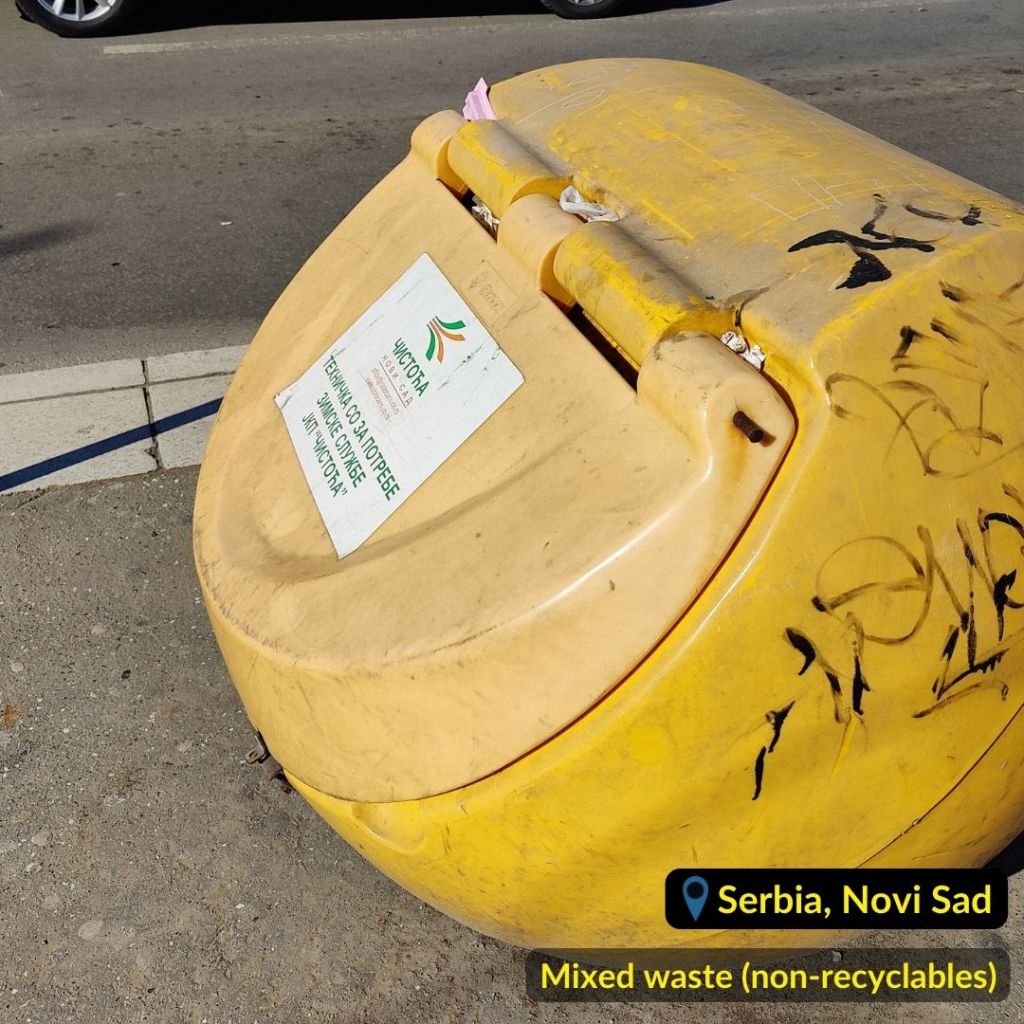
Grey bins for non-recyclables are the same in all cities around the world, aren’t they? But Novi Sad city surprised me with the yellow color and unusually shaped bins for mixed waste (but they do not look convenient for usage for me).
Was this post useful?
By Hanna Shahuryna ⭗ Updated on January 2025

 Travel and Recycle
Leave a comment