Copenhagen is, for sure, very environmentally-friendly city: great recycling and composting infrastructure, deposit return system and plenty of recycling centers. But how do locals recycle and what infrastructure is available for tourists?
Denmark article continues my series of posts about EU recycling infrastructure: so far I’ve added Poland and Bulgaria and more to come! Stay tuned on my Instagram and in YouTube not to miss new countries added to the Travel and Recycling Universe.
By the, way, if you plan a few days trip to Copenhagen I recommend you my Copenhagen Travel guide – this can be a support in your travel planning. 16 pages of useful tips and tricks, as well as the Google map with all bookmarks. To get an access to the Guide:
✔follow my Instagram page,
✔press 💗x5 for recent posts and
✔send me Direct Message that you want a guide. That’s simple!
📌 General information
The recycling rate in Denmark was 45.7% in 2022 (acc. to Eurostat) and keeps in the range of EU average recycling rates.

Denmark’s deposit-return system for beverage containers dates back to 1922 (!) and by 2019 achieved a return rate of 92%. Consumers pay a deposit on beverage containers, which is refunded upon return, incentivizing recycling.
Individuals (including tourists) who fail to comply with recycling regulations may face fines. The specific penalties can vary depending on the municipality and the nature of the violation.
All municipal waste is sorted into 5 fractions: paper, metals and plastics, glass, bio, and general waste. Let’s dive into the topic deeper now.
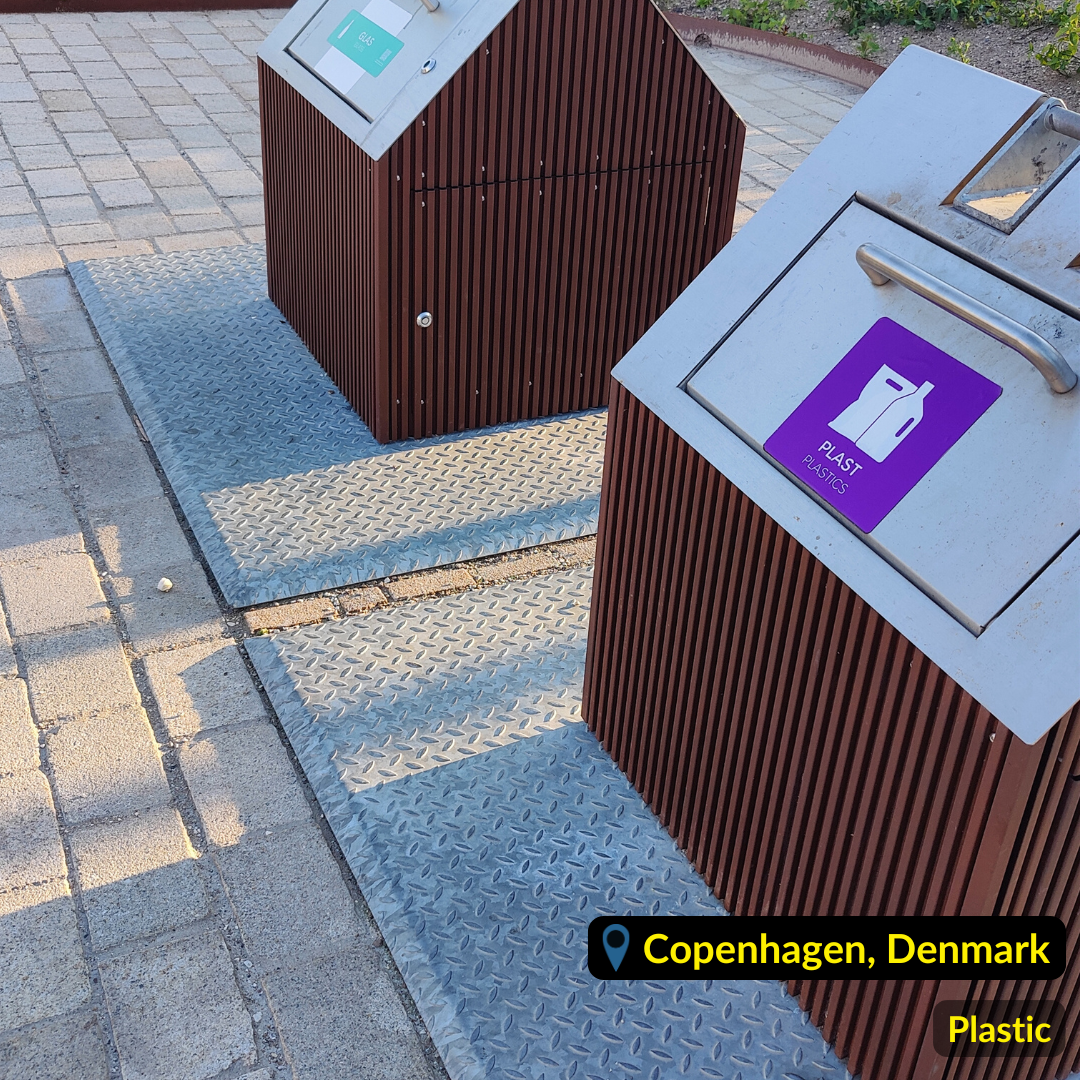
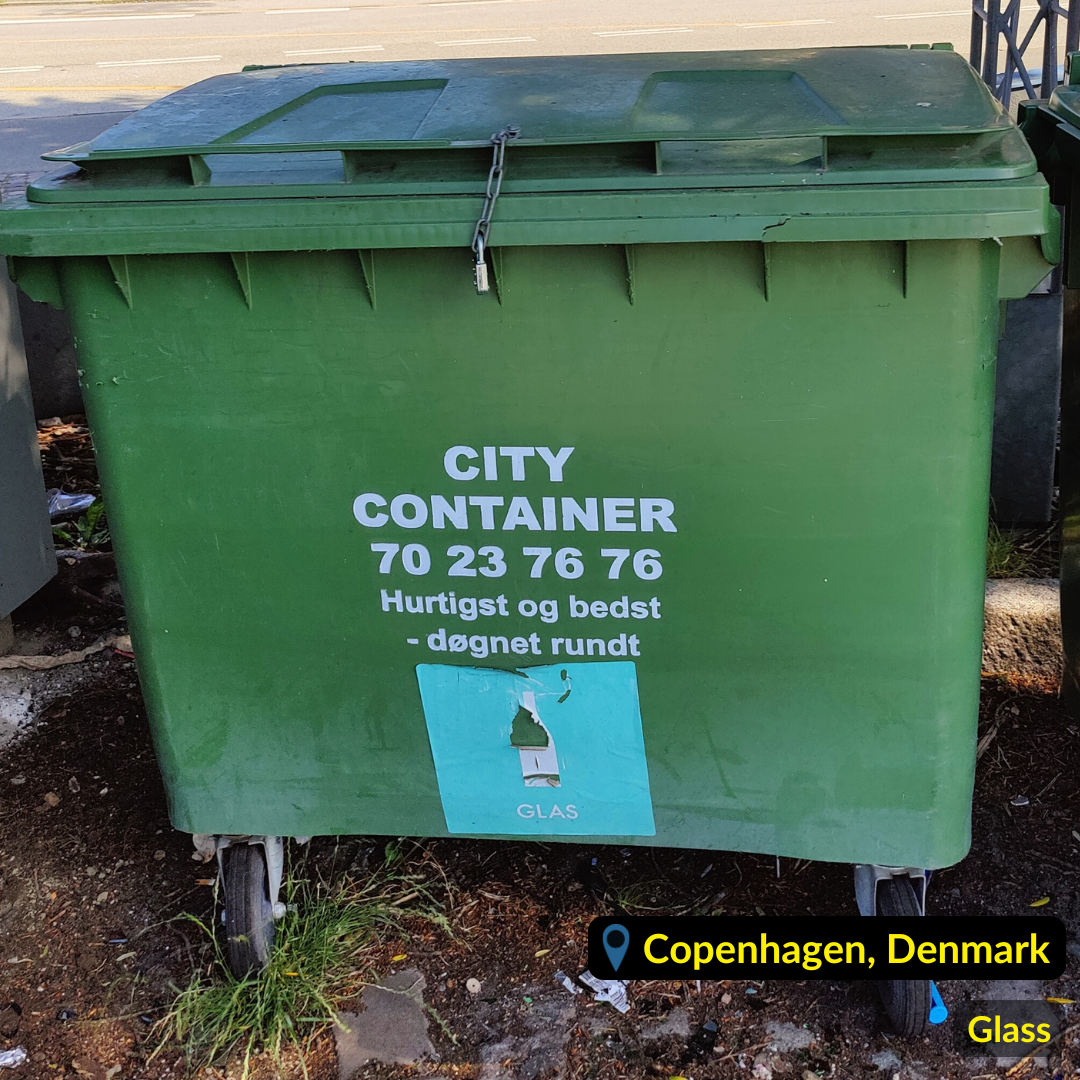
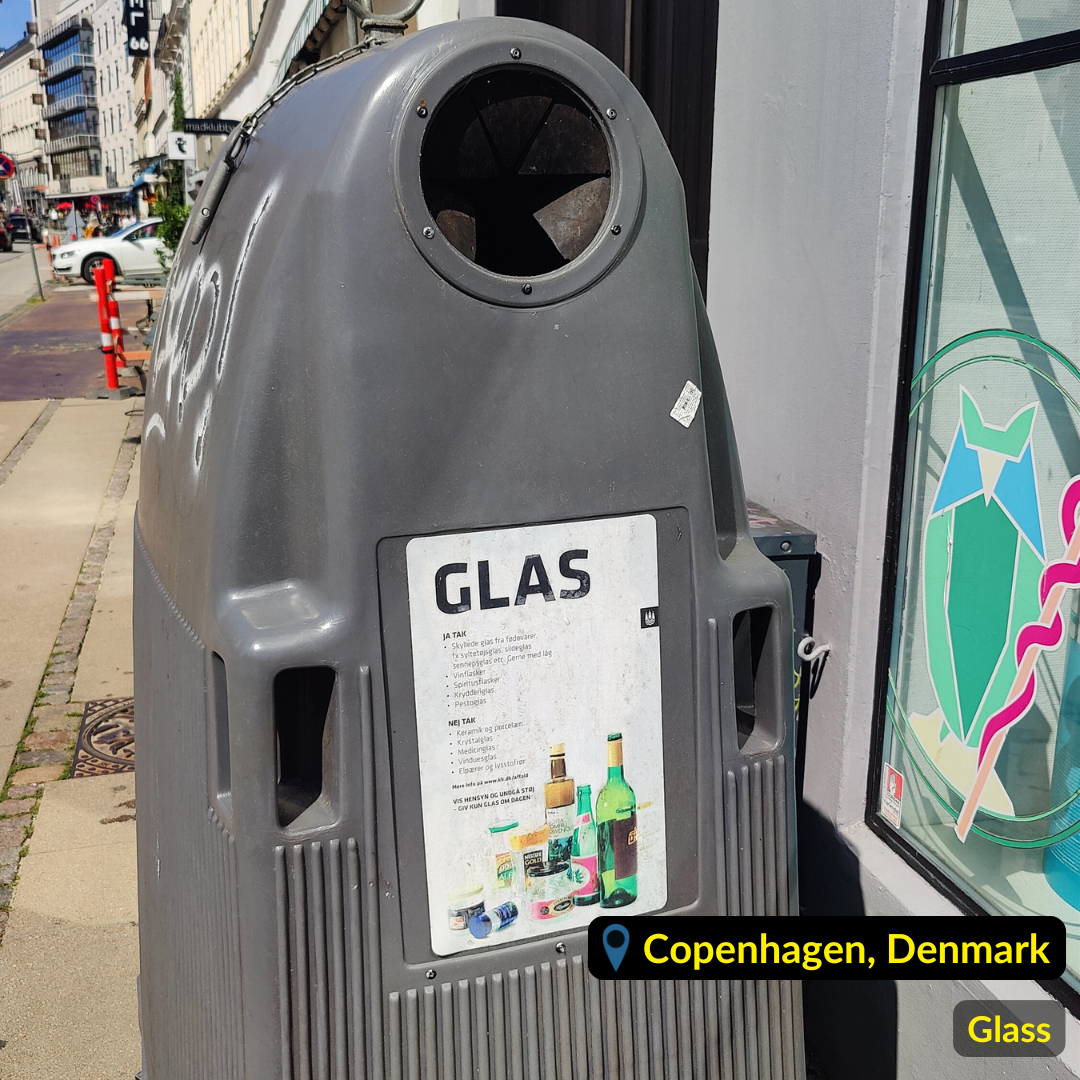
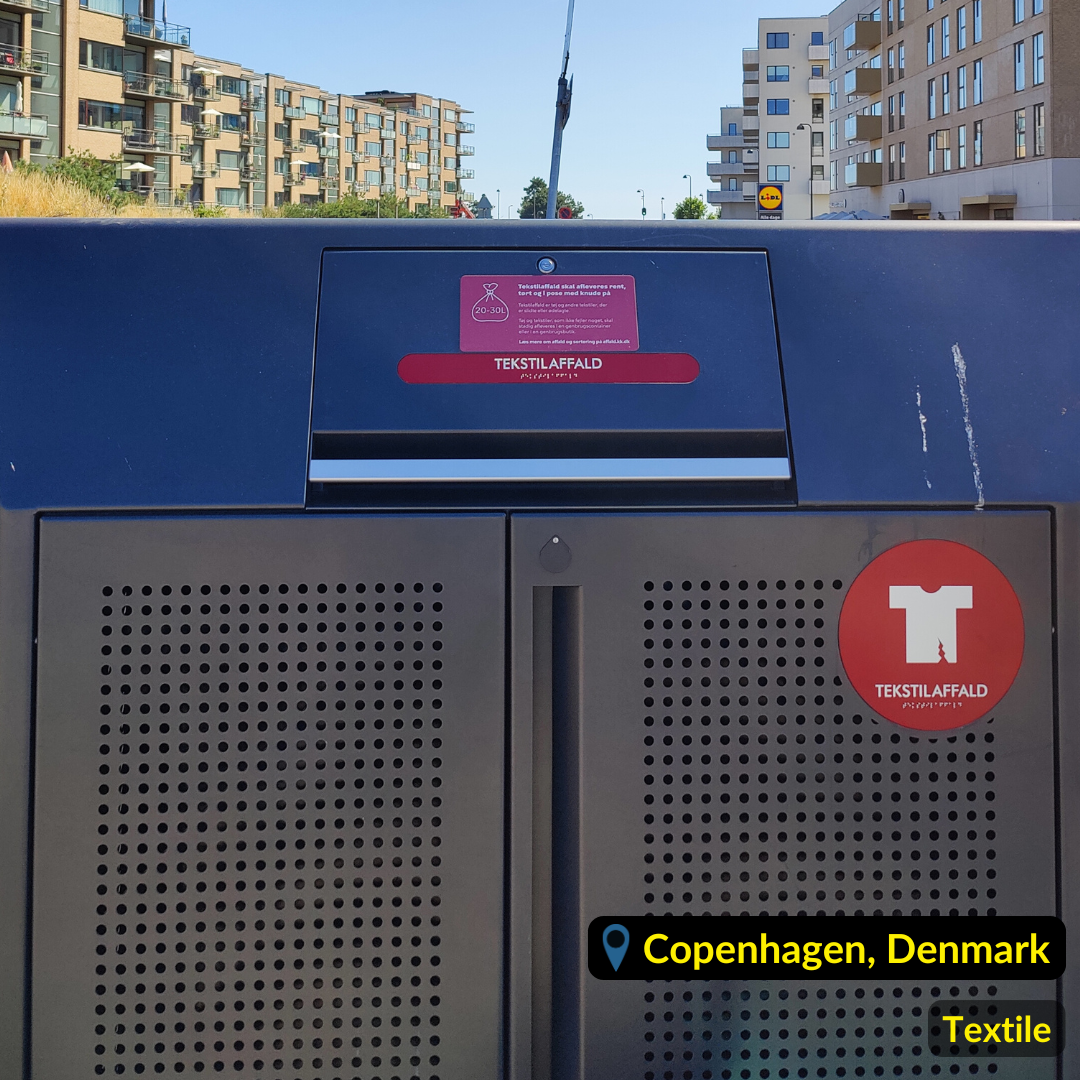
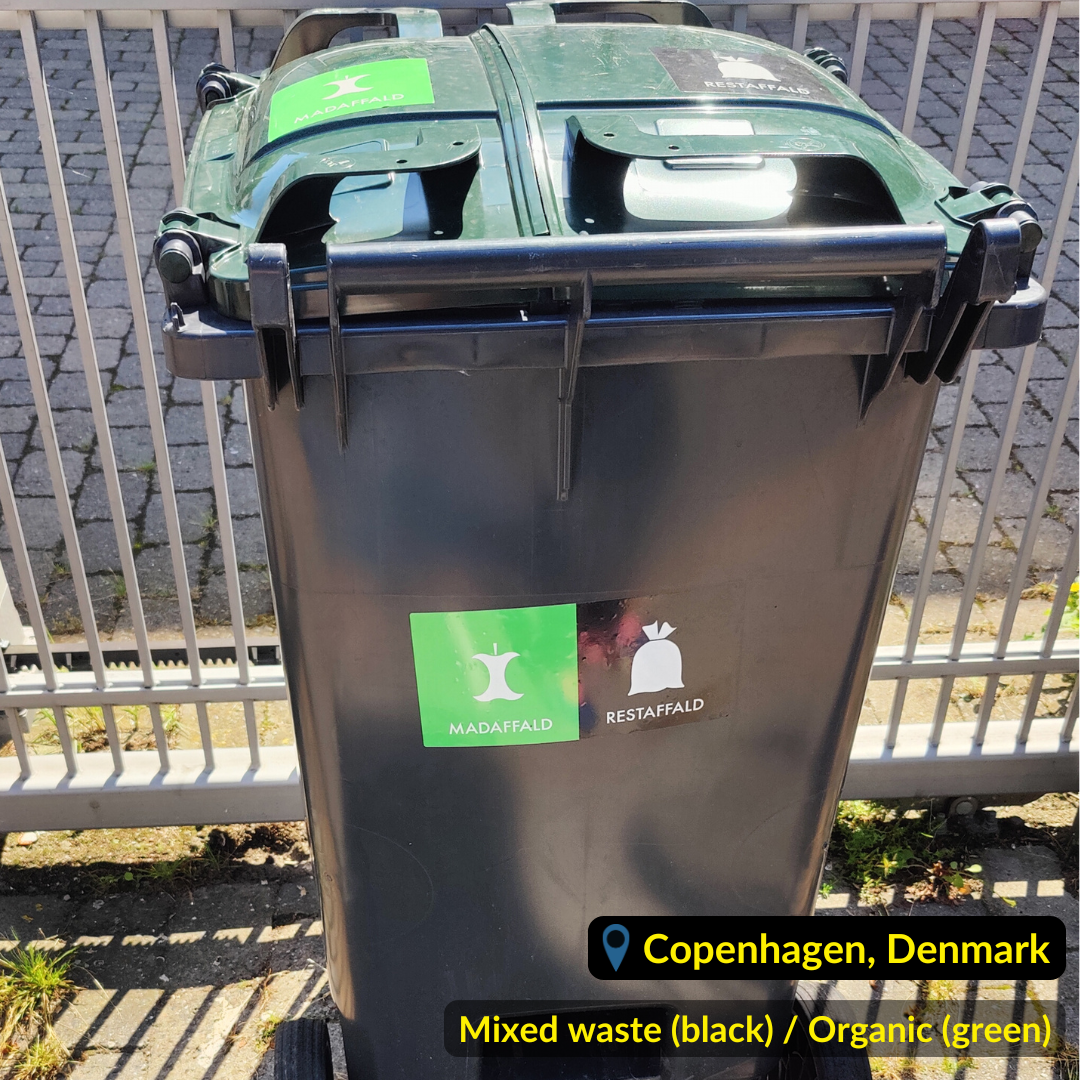
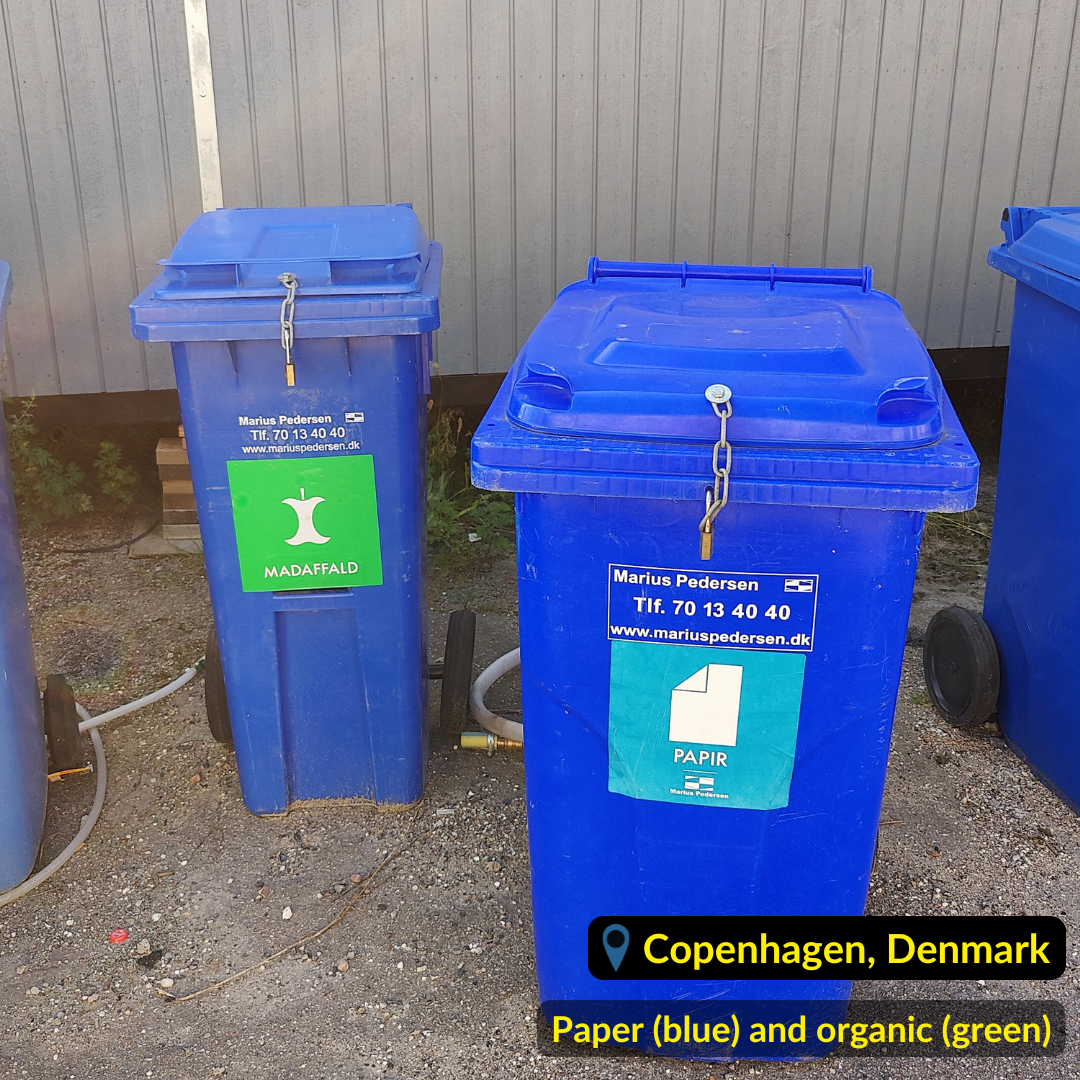
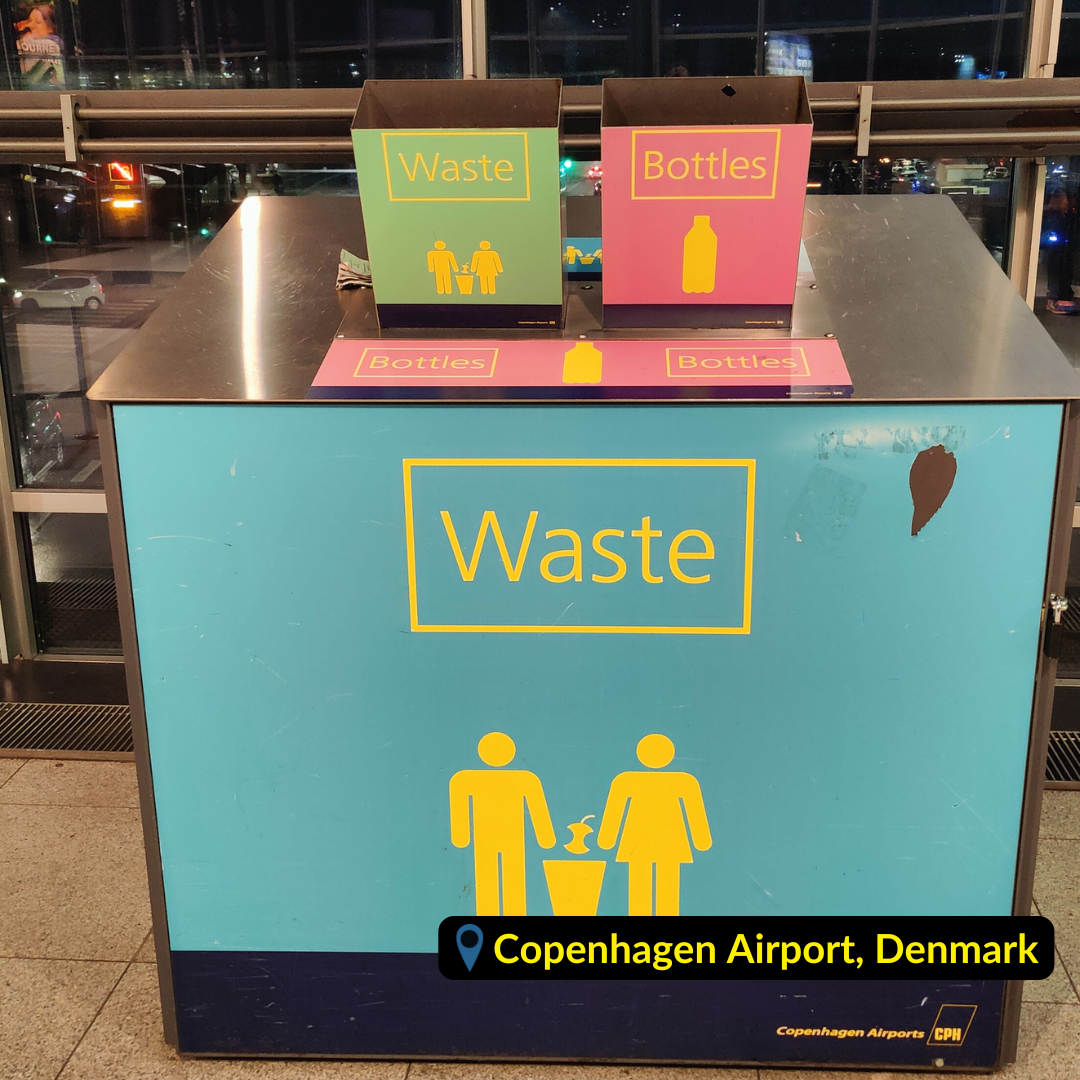
Recycling infrastructure for tourists is limitedly available on the streets: yes, you can find some recycling bins, especially for glass and plastic, in the city center, but some bins are just locked (photos #3-5 below), as they belongs to cafes or residential areas nearby.


🏭Recycling Stations
Recycling centers across Denmark create a great infrastructure, where individuals can bring recyclables, often allowing for more detailed sorting of waste fractions than standard 5 bins.
There are 2 main types of recycling centers in Denmark:
1. Big recycling centers (Genbrugsstationer) equipped to handle a wide variety of waste types, including hazardous waste;
2. And smaller, local collection points (Nærgenbrugsstationer) that accept only popular waste types, but as a advantage they are typically accessible by foot.
In Copenhagen, both big recycling centers and local collection points often feature a “swap stand” where individuals can donate or collect items that are still usable (reuse is, for sure, always more preferred option than recycling).
The full list of recycling centers of both types and their opening hours schedule you can find on the a-r-c.dk website (applicable for Copenhagen and 4 other municipalities nearby.
🥛 Glass
📚 Paper
🥤 Plastic
🧷 Metal
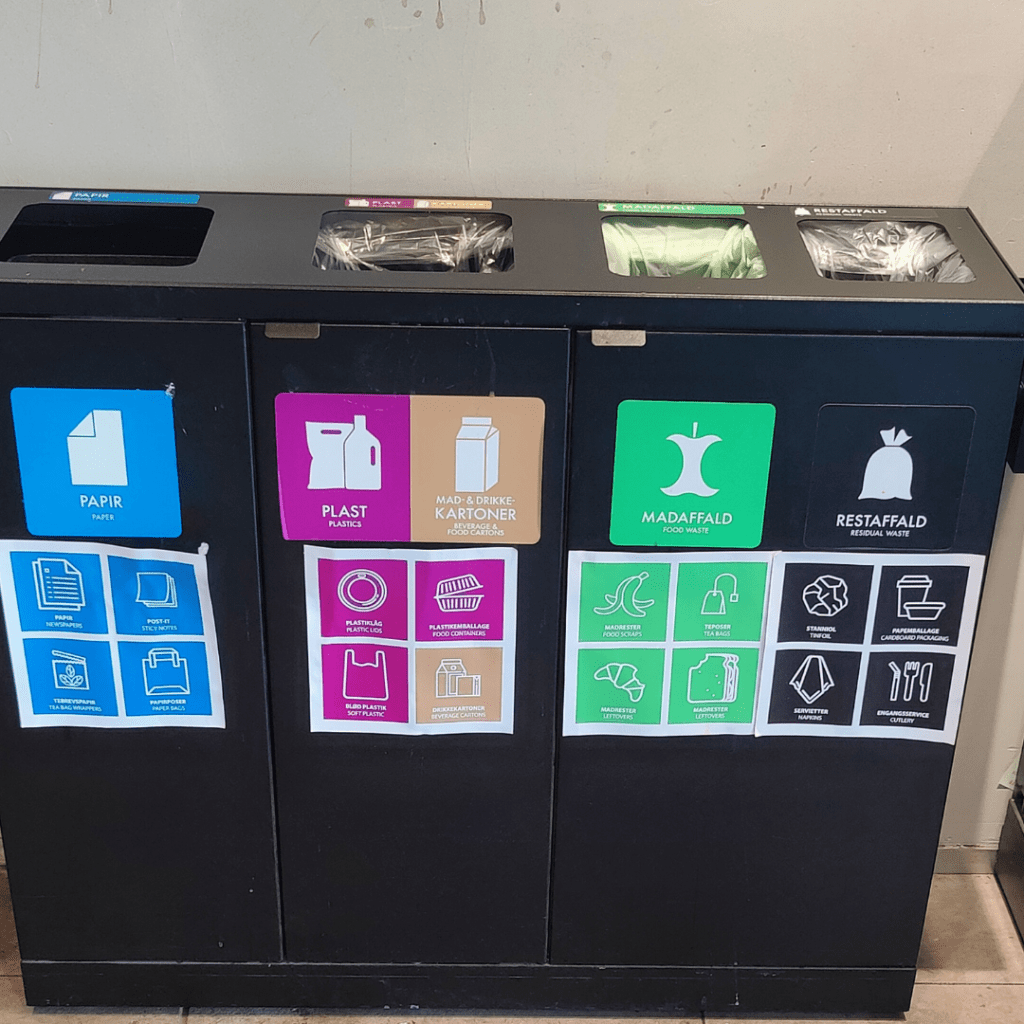
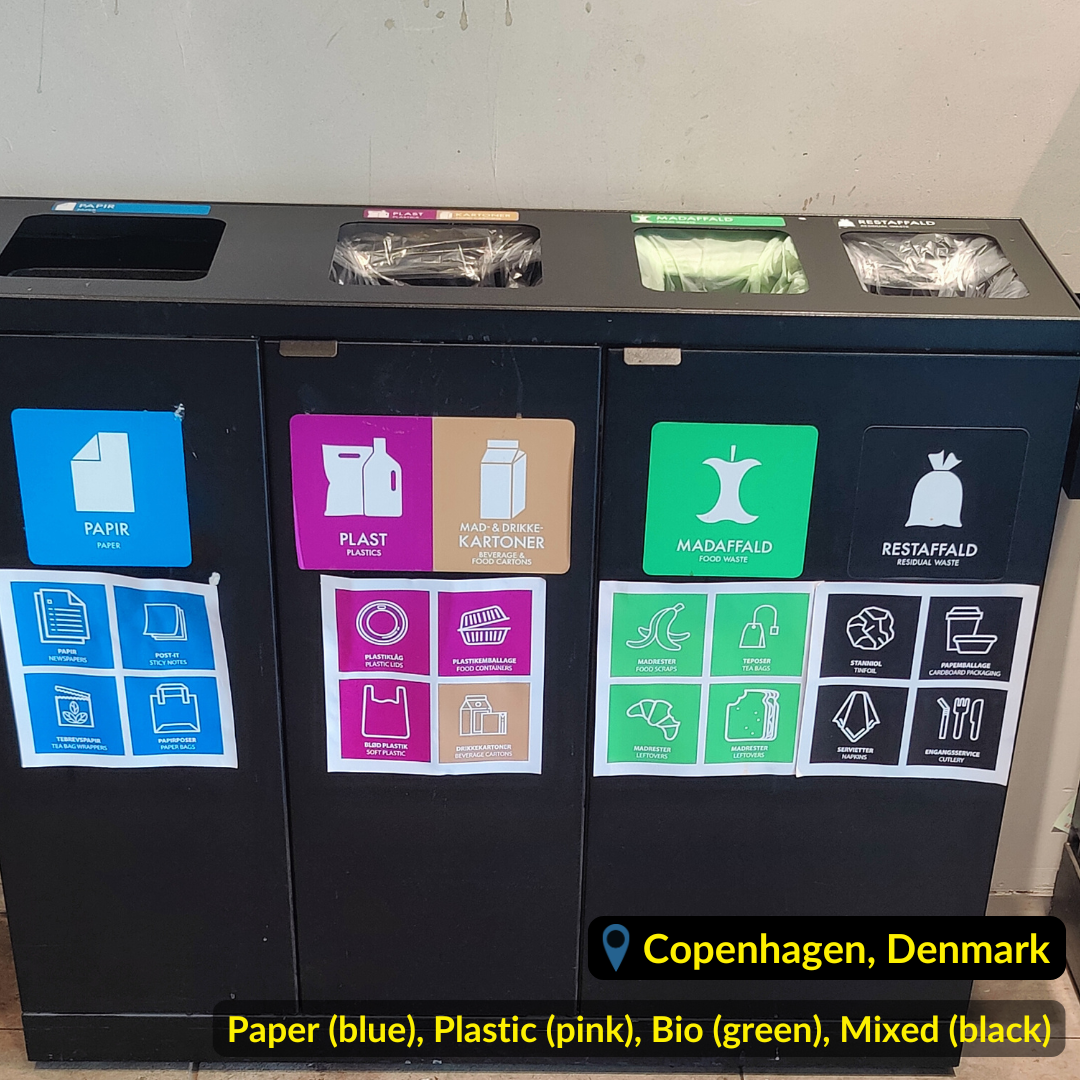
Color coding for Denmark recycling bins can be tricky and even misleading. I met different colors used for the same group of recyclables:
- green for organic (bio) – more details are provided below;
- blue for paper and cardboard (also can be yellow);
- white (or clear), blue or grey indications are used for glass;
- dark pink for plastic;
- and black, traditionally, is used for mixed / non-recyclable waste.
Residents are expected to sort their waste accordingly and place the appropriate materials in each bin. Recycling bins are usually located near the apartment complex in separate building, or just in the courtyard.
Use this link to find the nearest recycling bins or recycling station in Copenhagen. The web-site is working only in Danish, but for English speaking users availability of the map should help to find the nearest recycling point.
🔋 Batteries
💻 E-waste
🧦 Textiles
Hazardous waste types, such as batteries and electronic waste should be brought to one of the numerous recycling stations (read more details above) across Copenhagen. Please remember that it’s forbidden to throw hazardous waste into the mixed waste: the rule is applicable not only for Denmark, but around the world: we’re sharing the same Planet and same resources.
Textile recycling bins can be found across the city, but if you have some clothes that you consider to reuse rather than recycling, then I will recommend you to visit one of the recycling stations and leave it for the “swap stand”.
🍏 Organic
Bio (organic) waste in Copenhagen is managed by local municipality services in the following way.
1. Individuals must collect organic waste in dedicated green bio-bags. It’s recommended to tie a knot on the bags to minimize odors. Copenhagen municipality provides bio-bags and bins for it free of charge: find the nearest pick up points via this link.
2. Food waste is collected via a waste collection system: watch this video for more details.
3. Collected bio-waste is sorted further on the recycling plant facility and up to 95% of collected bio waste are converted into green energy and/or natural fertilizers, used locally.
I would say that I am positively impressed by the level of transparency available for locals: you have a clear instructions how and where to compost, you receive some incentives from the government to this habit and you can have clear understanding what is happening with you compost on all stages.
But being a tourist in Copenhagen I struggled to find any composting bin: all of them are locked or even located behind the fend. I can understand why: usually tourists are not that eco-conscious and simply throw away general non-recyclable waste into the composting bins. My advice for tourists would be to check Share Waste Application: maybe you can bring your compost to citizens or, it’s also worth checking with your apartment host or hotel personnel about how to compost in their facility.
🔥 Non-recyclable
Mixed waste is collected in black bins and then is primarily managed through incineration at waste-to-energy facilities. This is in long term, for sure, a controversial solution – that’s why Copenhagen city aims to increase the recycling rate to 70%, educate citizens about sustainability and provide incentives for eco-lifestyle – that all should have a final goal to decrease the mixed waste rate. Let’s see!
Was this post useful?
By Hanna Shahuryna ⭗ Updated on January 2025


 Travel and Recycle
Leave a reply to Recycling in Vienna: A Guide to Sustainable Waste Management Cancel reply